Yikes! I’m shrinking!
Our bone density peaks at twenty-five and the slide downhill begins. What is good bone health and how do we maintain it?
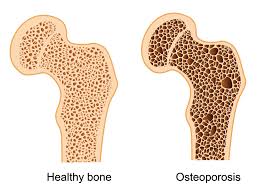
Bones are in a constant state of remodeling – dissolving microscopic bits of old bone, a process called resorption, and rebuilding new bone. After age 30 or so, a woman’s bones start to dissolve faster than they can be rebuilt, and after menopause she may develop thin, brittle bones that are easily broken.
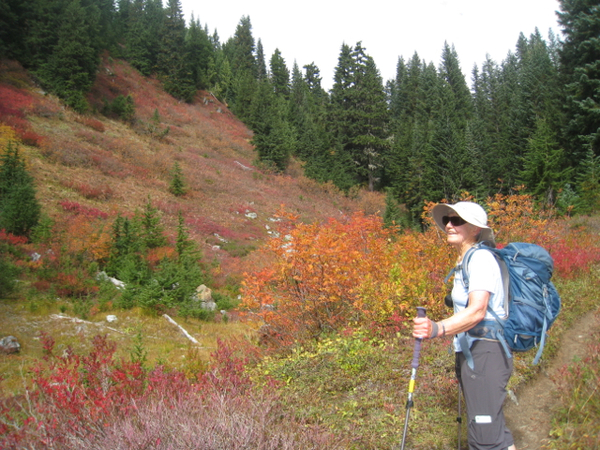
I was told years ago (age 51) that my bones were not dense enough to perform a spinal fusion with a plate and screws. My doctor gave serious thought to doing just that after I herniated a disc at L4 in my lumbar spine. Instead he advised me to get strong. I went to work with an exercise regimen together with a nutritional and supplement program and managed to build enough strength to hike sixty-five miles of the Wonderland Trail around Mt. Rainier (1990, age 53). It turns out that it is possible to build bone after menopause.
Fast forward to 2014 and a diagnosis of osteopenia. I was offered Bisphosphonates, including Fosamax, Procter & Gamble’s Actonel and GlaxoSmithKline’s Boniva, to slow the progression to osteoporosis. I asked my doctor to give me two years and enrolled in Xgym, determined to reverse the trend with focused weight bearing exercise. Two years later I had reversed the bone-loss.
Nine years later, February 14, 2024, the decrease in bone density has doubled and my doctor recommends Fosamax. I try it for two weeks and do not tolerated it well. I also read about the side effects and decide to go a different route. I will get an infusion of Reclast every year. Reclast (zoledronic acid) is a bisphosphonate. It works to slow down bone breakdown so the body can make new, healthy, and strong bones. Reclast (zoledronic acid) helps raise bone mineral density (BMD), which is a measure of how strong your bones are. A higher BMD means your bones are stronger, which helps lower your risk of bone fractures. If results are good in two to three years, I can stop the treatment.
What is my (your) part in rebuilding healthy bone?
Calcium supplements: I will continue to take Shaklee’s Osteomatrix, Chewable Cal Mag ,Vita D3, and Vita Lea Gold. It is important to get a blood test to determine your calcium levels so your doctor can modify the supplement intake to meet your particular needs.
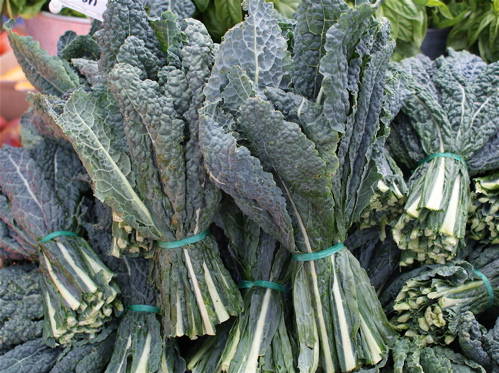
Diet: Greens provide calcium naturally. Broccoli is everything the say it is. Lots of calcium that is absorbed easily. Here is a chart of ways to get your calcium from your food. What the chart doesn’t tell you is that absorption is a challenge. Collard greens and other green leafed calcium loaded foods need a catalyst, vinegar or lemon juice to help break down the minerals so they can get to your bones. I don’t eat dairy (or very little) so beans and vegetables make up the difference.
I’ll continue to do weight bearing exercises, walking a couple of miles or more daily and hiking most Wednesdays.
How are you doing in this department?
I gave some thought to doing nothing. After all, I’m 88. What do you expect with a Nordic heritage. But the possibility of a spontaneous fracture is real. That would not be good while hiking somewhere in the deep wilderness or walking across my living room.
Let me know what your bone issues and concerns are. Shop at my Shaklee Personal Website for products that have been studied and proven to help maintain bone density. Who knows where I would be if I hadn’t been using these supplements for forty years?! Let’s get a bone health conversation going.
Be well, Do well, and Keep Moving! Betsy
900 University St., 8-B, Seattle, WA 98101. betsy@hihohealth.com. 206-409-5940