Resources, Scientific resources

Energy Pure, Energy Chews

Energy Pure Energy Chews

Pure Energy Chews
• Shaklee Energy Chews provide a clean burst of healthy energy to help you get that extra edge when you need it most. Each chew contains a scientific blend of caffeine from natural green tea extract, plus L-tyrosine, L-Theanine, B vitamins and Vitamin D3. And there are no artificial flavors, sweeteners or added preservatives you’ll find in other energy products.

That’s PURE energy!

Finally, a healthy alternative to high calorie, high volume energy drinks! Scientifically formulated Shaklee Energy™ contains the right ingredients to help energize your body and support alertness, focus, cognitive function, and mood.
• Energy-releasing B vitamins, immune-supporting Vitamin C and bone-building Vitamin D3
• Key amino acids L-Tyrosine and L-Theanine associated with mental alertness and focus
• Natural caffeine from green tea extract associated with energy and performance*
• No artificial flavors, sweeteners, or added preservatives and it’s gluten free

Energy Chews contain healthy ingredients work fast to help:
• Sustain energy*
• Improve performance*
• Stay alert*
• Sharpen focus*
• Improve mood*

Before Exercise use Shaklee Energy™ Chews
You need energy for motivation and to “spark” the metabolic reactions that fuel muscles.  Shaklee Energy Chews provide a clean burst of healthy energy to help you get that extra edge when you need it most.

The Shaklee Difference
• Formulated with natural caffeine from green tea
• Contains no artificial flavors, sweeteners, or added preservatives
• Gluten free
• Just two chews per serving instead of a canned product
Sports nutrition products are sold at big-box retailers, drugstores, and even grocery stores.  However, many conventional sports nutrition products, especially the most popular retailbrands, contain artificial flavors, sweeteners, and preservatives. Conventional sports products may be untested or they may contain ingredients that are unproven. Rather than testing products in clinical tests or with world-class athletes, many companies choose to introduce new products without scientific substantiation. Additionally, ingredients that can provide important benefits may be missing from some products. It doesn’t make sense to put unproven or untested ingredients in your body at the same time you are asking your body to deliver maximum effort and optimal performance.

Shaklee Sports Nutrition™ puts in the Best, to Bring out the Best
Shaklee Sports Nutrition products are used at the highest levels of competition so you can trust them every time you take them — before, during, and after your workouts. Train longer. Recover faster. Perform better. And don’t worry; these are natural products with no artificial flavors, sweeteners, or preservatives. Everything you need. Nothing you don’t. That’s PURE performance!

THE SHAKLEE DIFFERENCE
Always Safe
Natural products with:
✔ No artificial flavors, sweeteners, or preservatives
✔ No banned substances
✔ Exceptional quality control

Always Works
✔ World-class Shaklee-sponsored athletes have won over 100 medals
✔ Seven of Time Life’s Greatest Adventures of All Time were powered by Shaklee
✔ Clinically tested with proven results: Physique® and Performance®

Always Green
✔ Environmentally friendly packaging

Thousands of athletes around the world trust Shaklee Sports Nutrition™. We’ve got you covered no matter what you play, where you play, or how hard you play. Shaklee powers athletes to push limits and achieve more. Shaklee athletes have won more than 100 medals
• Seven of Time-Life’s Greatest Adventures of All Time were fueled by Shaklee
• Natural products with no artificial flavors, sweeteners, or preservatives
• Clinically tested with proven results:
– Performance® minimizes fluid loss to enhance hydration
– Performance increases endurance
– Physique® triggers the anabolic recovery state after exercise
– Physique restores muscle energy fast

 Lean and toned is in: Shaklee products are proven to help you train longer and recover faster so you can stay lean and toned.

 Convenience is in: Shaklee Energy™ Chews are more convenient than energy drinks to transport and consume.

 Fitness and Endurance are in: Shaklee Sports Nutrition products provide ingredients to help you optimize fitness levels and athletic performance.

 Natural is in: Shaklee Sports Nutrition products do not contain artificial flavors, sweeteners, or preservatives.
*These statements have not been evaluated by the Food and Drug Administration.
These products are not intended to diagnose, treat, cure, or prevent any disease.

Buy now at www.HIHoHealth.com

Resources, Scientific resources

Re-hydrating drinks to avoid bonking

Performance® Pure Hydration Drink
6.16.12

First: We will look into a little history and the discovery of Performance
Next: Shaklee’s Performance the drink that fueled the impossible
Followed by: Endurance Foods Clinical Studies
Concluding with: The secret behind Performance

It had been done only in legend. Indeed, experts wondered if it could ever be done in reality. Named after the mythical Greek inventor who flew on wings of wax and feathers, the Daedalus Project, would attempt to fly 72 miles between the Greek islands of Crete and Santorini. In a super-lightweight plane, one pilot was to pedal the entire distance over open ocean; in terms of human endurance, it could be the energy equivalent of running three marathons back-to-back at top speed without stopping.
Daedalus engineers and scientist, top researchers from MIT and Yale, turned to Shaklee for help in overcoming the most critical limitation: the pilot-athlete’s ability to sustain such an intense level of activity for so prolonged a period of time.
The result months of exhaustive testing with Shaklee Performance proved that this drink had such power and energy; it could stand up to the tremendous physical challenge of muscle-powered flight. On April 23, 1988 the impossible became recorded history, and the pilot’s only fluid and fuel for this grueling flight was Shaklee Performance.
The Daedalus Project, setting the world’s record for human powered flight is just one of Seven Shaklee’s triumphs out of “Time-Life’s “25 Greatest Adventures of all Time” were powered by Shaklee products. Another point of interest Shaklee has worked with NASA for over 12 years. One of the products for the astronauts was “AstroAid” the re-hydration drink known as Shaklee’s Performance. Shaklee “Performance Maximum Endurance Sports Drink delivers 67% more muscle fuel than Gatorade and prevents “bonking” & “hitting the wall”.

ENDURANCE FOODS include Performance; they also include pasta, rice, and oatmeal. These are slow-burning carbs and are the carb load meals consumed the night before.  Performance is superior because GATORADE has too much sugar, and sugar dehydrates the body. Performance hydrates you and keeps you going strong the entire game. It’s excellent because there’s a steady stream of carbs to burn during the performance, and the electrolytes address recovery and re-hydration.

In a clinical study, Shaklee Performance helped maintain athletes’ blood-glucose levels
for muscle energy and fluid levels for proper hydration. After more than three hours of vigorous cycling in the laboratory, during which time the cyclists consumed either Shaklee Performance or water, the speed was turned up even higher. At this sprint pace, Shaklee Performance drinkers endured for 33 minutes, while the water-only group lasted just two minutes. Shaklee Performance offers proven endurance.
During Exercise, Shaklee Performance® a pure hydration drink and a blend of
electrolytes is ready to support optimal hydration and our unique mix of carbohydrates to maintain glucose levels for sustained energy output.
Satisfy Your Thirst for Winning while using Performance. Dehydration is the most common cause of fatigue and poor athletic performance.

Shaklee Performance is clinically proven to hydrate better than water. Plus, Performance has more electrolytes and provides more energy than the leading hydration drink. Our proprietary OPTI-LYTE™ electrolyte blend plus our unique mix of carbohydrates delivers instant and sustained energy and supports optimal hydration. Take the “endure” out of endurance sports.
Clinically proven to sustain energy, we call it Performance for good reason. Clinical tests with high level athletes show that Shaklee Performance:
• Minimizes fluid loss for enhanced hydration
• Delivers a full spectrum of electrolytes, including calcium and magnesium (not in
the leading brands)
• Maintains blood-glucose levels to sustain intense energy output and to increase
stamina Shaklee Performance sustains more energy & more endurance. The longer and tougher your workout, the better Performance gets.

Shaklee Performance includes:
• OPTI-LYTE, a proprietary electrolyte blend to support optimal hydration
• A unique mix of carbohydrates to deliver instant and sustained energy

And now, the secret behind Shaklee Performance; the unique carbohydrate formula called OptiCarb, offers immediate and sustained energy in great-tasting, thirst-quenching lemon lime or orange flavor. Shaklee Performance, originally developed to fuel human flight is ready to keep anyone going longer.
Now Shaklee Performance can help you do the impossible. If you’re into sports, Shaklee Performance can help you perform better and recover faster. But even if you just need energy for a day of shopping, gardening, or running after the kids, Shaklee Performance will get you through your day feeling great!

*These statements have not been evaluated by the Food and Drug Administration.
These products are not intended to diagnose, treat, cure, or prevent any disease.

Arthritis, Be Well health tips, Health and Fitness, Keep Moving: Managing Arthritis, travel

Legs are numb. Now what?

Gentle Reader,

climbing the steps to Montmartre
Daunting climb to Montmartre Basilica

The Sunday before leaving for three weeks in France I was standing in the choir and my right leg lost most of its feeling.  It tingled down to the foot.  I could see I was standing.  I could feel my upper body level, but my legs were numb.  All I could think of was what if this happens in France, in the middle of the Place de la Republic or climbing the steps to Montmartre?  

reduce back pain with an inversion table
Inversion table to relieve spinal pressure and collapse

I went home immediately and strapped myself into my inversion table, rocked back and forth a few times and then hung upside-down for as long as I could stand it.  The numbness went away, but what was I going to do in France?

Place de Contrescarpe, Paris left bank
Photo
me on the front porch, pic by Kevin S. Moul, writer/photographer

Walking around Paris, moving slowly from our Paris Oasis beneath Montmartre all the way to Place de Contrescarpe on the Left Bank, my right leg remained numb.  I could keep from falling by concentrating on the placement of my foot, using focus and intention rather than unconscious walking.  I was definitely preoccupied when we stopped in at the Shakespeare and Co. book store, the one-time lending library which catered to the young writers hanging out in Paris before WWII and after.  These authors included Ernest Hemingway, Gertrude Stein, Ford Madox Ford, F. Scott Fitzgerald and Ezra Pound.  We were going to study the writings of some of these in our week long writers’ retreat with Natalie Goldberg.  Distracted, my cell phone disappeared.  No posting on face book, no phoning via skype.  I was about to enjoy a complete vacation from electronic communication and was able to focus solely on writing and meditation.  Natalie’s retreats are conducted in silence except for class time.  That means meals, and morning and evening bath and bedroom negotiations among the 10 women living in La Solitude, a quarter mile from the Ferme Villefavard.  Can you imagine how you might emerge from such a phone free existence in a euphoric state of mind?

managing arthritis back pain and leg numbness
feet in chair, knees at right angle

My solution to the numbness problem was to hang from my knees with my feet out of the window in the second floor of this beautiful building (above).  This position lifted my sacrum and lower vertebra off the floor.  I used padding under my knees.  Then I lowered my self down (my butt is up against the wall under the window, here’s a picture I took when I was in New York City last month.

Every morning to open the sacrum and lower back

You can link to the image in a previous post.  The idea is to perform gentle pelvic clock motions to open up the pinched passage so the nerve endings can communicate with the feet and lower legs.  At home I use the Back2Life machine every morning.

Limousin cows
Limousin cows protect their young vigorously

The Writers’s retreat gave me plenty of opportunity to be quiet, write and read aloud.  The countryside was filled with Limousin cows, prime beef, and riotous wildflowers.  I managed to explore the Lascaux caves and canoe with my friend after the retreat.  The trip home was uneventful.  Because I had no phone, no phone money and no phone numbers, I took the light rail, the C Rapid ride bus to west Seattle and walked to my house pulling my suit case.

Keep moving, is what I say.  It would have been tempting to avoid stepping out into the streets of Paris, the roads around Villefavard, the deep caves and the castles of the Dordogne, but I did not.  I trusted my body would not fail me and it did not.

Be well, leave me a comment, Do well and Keep moving.

Betsy

206 933 1889


Arthritis, Keep Moving: Managing Arthritis

Manage Arthritis: Hip labral tear

Gentle Reader,

One of the strong older ladies I ski and hike with just wrote that she had a hip replacement.  I was stunned to hear the news and asked more about it.  She had a sudden tear called a labral tear, something I had never heard of.  Intrigued, I thought I’d share what I learned.

According to the Mayo Clinic web site,

“A hip labral tear involves the ring of soft elastic tissue, called the labrum, that follows the outside rim of the socket of your hip joint. The labrum acts like a socket to hold the ball at the top of your thighbone (femur) in place.

“Athletes who participate in such sports as ice hockey, soccer, football, golf and ballet are at higher risk of developing a hip labral tear. Structural abnormalities of the hip also can lead to a hip labral tear.

“Symptoms include hip pain or a “catching” sensation in your hip joint. Initial treatment may include pain relievers and physical therapy. Using arthroscopic techniques, surgeons can remove loose fragments from within the joint and trim or repair the hip labral tear.”

My friend had had no symptoms whatsoever until the sudden onset of acute pain.

The Mayo Clinic site does mention some symptoms

Many hip labral tears cause no signs or symptoms. Occasionally, however, you may experience one or more of the following:

  • A locking, clicking or catching sensation in your hip joint
  • Pain in your hip or groin
  • Stiffness or limited range of motion in your hip joint

Here’s the part that interests me and you, my readers.  Causes.  We want to avoid the causes of arthritis if possible.  We want to manage arthritis when it develops if possible.

  • Trauma. Injury to or dislocation of the hip joint — which can occur during car accidents or from playing contact sports such as football or hockey — can cause a hip labral tear.
  • Structural abnormalities. Some people are born with hip problems that can accelerate wear and tear of the joint and eventually cause a hip labral tear.
  • Repetitive motions. Sports-related and other physical activities — including the sudden twisting or pivoting motions common in golf or hockey — can lead to joint wear and tear that ultimately results in a hip labral tear.

Without knowing all the details, I’d guess my friend, like so many of the rest of us who hike every week and ski in the winter, the repetitive motions and wear and tear can go on a long time without any sign of arthritis at all.  Then the sudden move, often one we’ve been doing forever, can set the whole thing on fire.

The Mayo Clinic goes on to say that anyone who is over-using a joint could have this result.  My question is, what is over-use?  How to find the balance between keeping moving and over-use?  I know my friend paid close attention to her body and stretched before and after the activities I was part of.  She was often by herself stretching outside the ski bus before the ride home.

So what’s a person to do?  Why of course, Keep moving.  Listen to your body.  Be glad you are a healthy active person when something like a labral tear occurs because you will bounce back quickly.  She’ll be on the slopes with us next winter.  She’s unaware of any other arthritis that needs managing.  Nothing is showing up yet.

Fondly,

Betsy

Be well, Do well and Keep Moving.

Leave a comment or pass along to your friends.

Arthritis, Be Well health tips, Health and Fitness, Keep Moving: Managing Arthritis

Out of the exercise habit: bad for arthritis pain

Gentle Reader,

Funny how you can be diligent with your daily back health exercises and stretches when you are traveling, IMG_0520but get too busy at the desk to do them when you get back home.  Then suddenly the pain shows up.  I do know what to do:

1.  Get to bed earlier so rest can heal.

2.  Walk every day, no matter what

3.  Weight lifting and other core strengthening exercises are a must

4.  Get back to the sugar and gluten-free diet

New York was a blast with Ellie. Here are some pictures.

Ellie and I hung out in Times Square’s hustle and bustle visiting the Disney store, Toy R Us where we rode the ferris wheel, the M&M store with irresistible branded items from coffee mugs to bed linens (she bought an M&M covered basket ball!).  We sat on the bleachers and watched the flashing lights from every building and all the people speaking every language on Earth.  She got herself on the big screen for a few seconds. IMG_0457 Madame Tussaud’s wax museum is a history/pop culture lesson.  For her, American giants from George Washington and Lincoln to the Obama’s came alive.  For me, she introduced me to the TV stars, singers and comedians who perform today (and I never watch).

We went to see Annie on Broadway, her first such production.  Fabulous.IMG_0453

A friend of mine who volunteers as a Big Apple Greeter toured us around China town, but the real thrill for this girl who has been exposed to Mandarin in her elementary school since she was in kindergarten, was recognizing the spoken language as we waited in line for the New York Harbor tour.  In her extreme shyness, she managed to say a phrase in Mandarin to the young woman who just graduated from a US university and her parents who came from Shanghai to witness this big event.  They were thrilled and I think she was, too.   IMG_0555

Central Park and the Museum of Natural History were walking distance away from my friend’s Riverside Drive apartment and the IMG_0451weather was wonderful for strolling.  Probably the most exciting thing Ellie did was make a Muppet at FAO Schwartz.

Our host, Mary Ann, has two lovely cats which Ellie befriended.  One afternoon several writing friends came to “write with Ellie” whose teacher often had the 5th grade students write on topic, never lifting the pen until the time is up.IMG_0542

A highlight for me was our trip with Mary Ann and her friend Jan to Brooklyn for brunch in a funky restaurant that had been completely under water during the hurricane and served the best breakfast we’d ever eaten out.  We also visited the Brooklyn Art Museum where we spent time with the extraordinary women IMG_0523depicted in Judy Chicago’s famous Dinner Party.  On our last day there we went out to Saint John the Devine.  Blue-gowned graduates of Columbia Teachers’ College were just leaving the Cathedral and their ceremony.  Proud parents and grand parents took pictures as we sat on the steps.  Later when I asked Ellie if she would ever come back to New York, she said maybe she’d go there to college.


Ellie is the next to the last child to take on a trip.  Charles Grant Finney is 10 so it will be a couple of years.  Perhaps her older sister will decide she’d like to take a trip with Grandma, but so far it hasn’t seemed like a good idea to her.  What a glorious series of adventures it has been.  Sixteen children altogether; 13 trips so far.  I am one lucky grandma. For more pictures, click here.

My hope for you is that you, too, will be able to keep moving into your 70s.  Don’t let your busy-ness distract you from those exercises that keep your core strong so your back and joints don’t have to do all the work.  Our bones and joints get tired and worn out, but the capacity of our muscles depends on our diligence.  We keep them supple and strong or let them get flabby.

Take a moment to leave a comment about travel and managing your arthritis when you are on the move.  Or about anything else you care to share.

Fondly, Betsy

Be Well, Do Well and Keep Moving

206 933 1889

Scientific resources

Recent studies about cardiovascular disease, death and Calcium

Dr. Steven Chaney reviews the recent studies behind the sensational news stories about calcium supplementation and death.

Should men avoid calcium supplements? Should women
avoid calcium supplements? Do calcium supplements
increase heart disease risk? If you’ve been listening
to some of the recent headlines in magazines,
newspapers and health blogs, that’s exactly what you
might think. And, after years of telling us that
calcium supplements may be important for bone health,
even some doctors are now recommending that their
patients avoid calcium supplements. So what’s the
truth? What should you believe?

Let’s start by examining the existing research. The
latest headlines are based on a JAMA article (Xiao et
al, JAMA Internal Medicine, 173: 639-646, 2013) that
concluded that high calcium intake from supplements was
associated with a slight (20%) increased risk of
cardiovascular death in men, but not in women. Another
study (Michaelsson et al, BMJ, 2013:346 doi:
10.1136/bmj.f228) published earlier this year concluded
that high calcium intake (> 1,400 mg/day) was
associated with an increased risk of cardiovascular and
all cause death in women, but not in men. In this study
calcium supplementation was also associated with an
increased risk of death, but only in women with a total
calcium intake greater than 1400 mg per day.

Of course, the press always likes to hype the latest
study, especially if that study is bad news. So let me
help you evaluate that report the way that a scientist
would. To begin with one of those studies concluded
that calcium supplementation is associated with
increased cardiovascular death in men, but not in
women. But, the other study concluded that calcium
supplementation is associated with increased
cardiovascular death in women, but not in men. That’s a
bit curious. Obviously, both studies cannot be correct.

So what does a scientist do when confronted with
conflicting studies? We dig a bit deeper into the
literature and asking what other studies say. And. when
I dug further into the literature, things got even
murkier. It turns out that both of those studies are
contradicted by other, equally good, clinical studies.
For example, two major studies have found no
correlation between cardiovascular death and either
dietary or supplemental calcium intake (Li et al,
Heart, 98: 920-925, 2012; Bolland et al, BMJ, 342:
d2040, 2011). And, another study reported that both
increased dietary intake of calcium and use of calcium
supplements were associated with a reduced risk of
death in women, but not in men (Langsetmo et al, J.
Clin. Endocrin. Metab., doi: 10.1210/jc.2013-1516).
Faced with all the conflicting published clinical
studies, the Institute of Medicine recently concluded
that “evidence from clinical trials currently does not
support an effect of calcium intake on risk of
cardiovascular disease”.

Are you confused yet? If so, you have every right to
be. The experts in their field are also scratching
their heads.

So let me add to your confusion by sharing with you yet
another study that has just been published (Van
Hemelrijck et al, PLOS One, April 2013, volume 8, issue
4, e61037). This study looked at 20,024 adults 17 years
old and older who were surveyed in the third National
Health and Nutrition Examination Survey (NHANES III).
The study asked how many of them died of cardiovascular
disease over the next 12 to 18 years. The strength of
this study is that it evaluated serum calcium levels as
well as dietary and supplemental intake of calcium. In
this study only serum calcium levels showed any
correlation with cardiovascular death – and even this
effect was confusing. For women there was an increased
risk of cardiovascular death for those with serum
calcium levels in the top 5%. In contrast, for men
there was an increased risk of cardiovascular death for
those with serum calcium levels in the bottom 5%. Once
again, no association was observed with cardiovascular
death and either dietary or supplemental calcium
intake.

The reason I’m bringing this study to your attention is
I think it may offer a key to understanding the
conflicting results of previous studies. Serum calcium
levels are very tightly regulated by the body and are
not normally affected by either high or low calcium
intakes. For example, in the study above there was no
correlation between serum calcium levels and either
dietary or supplemental calcium intake. Significant
variations in serum calcium levels are usually
associated with either metabolic or hormonal diseases.
Perhaps some of the conflicting results in the
previously mentioned studies may be due to inclusion or
exclusion of people with diseases that affect serum
calcium levels. I will hasten to add that this is just
a hypothesis on my part – one that needs to be verified
by further studies.

So what is the bottom line for you?

1)The evidence that calcium supplementation affects
cardiovascular risk is weak at best. While the
possibility of increased cardiovascular risk associated
with high calcium intakes exists, the preponderance of
evidence suggest that this is not a concern, despite
what many of the recent headlines suggest.

2)On the other hand, there is clear evidence that
calcium intake in the 1000 to 1300 mg per day range
decreases the risk of osteoporosis, and osteoporosis
can significantly decrease the quality of life and even
lead to increased mortality. Most people aren’t getting
enough calcium in their diet. For these people
appropriate calcium supplementation is clearly
advantageous.

3)So my advice is to ignore the scary headlines and
continue to make sure that you’re getting the 1000 to
1300 mg of calcium per day that you need for healthy
bones. I will keep you updated if the science about
cardiovascular risk changes.

4)Of course, you don’t need to go overboard on
supplemental calcium. Start by figuring out your
dietary calcium intake. You can count on about 200 to
250 mg per serving for most dairy products, and most
people get around 200 mg per day of calcium from other
food sources. Once you’ve figured out your dietary
calcium intake, add enough supplemental calcium to
bring your total intake up to the recommended RDAs
(1,300 mg/day for ages 13-18, 1,000 mg/day for ages
19-50, and 1,200 mg/day for adults over 50).

5)Finally, as I have told you previously, supplemental
calcium is unlikely to do mischief if it is utilized
primarily for bone formation, so make sure that you are
getting 800 to 1200 IU of vitamin D per day plus RDA
levels of the other nutrients needed for bone formation
(vitamin C, vitamin K, magnesium, zinc, copper and
manganese).

To Your Health!
Dr. Stephen G Chaney

May 2013

Arthritis, Be Well health tips, Health and Fitness, Keep Moving: Managing Arthritis

Can an ADD/ADHD study help us?

Gentle Reader,

I just read Dr. Steve Chaney’s most recent post which concerns food sensitivities and ADD/ADHA.  The study is carefully done with cross checks for biases and the resultant information is extremely helpful for the parents of children who once might have been identified as “figgitty” and now are sent home for a prescription.

For years I have been writing about diet to alleviate the aches and pains that come with osteo-arthritis, as well as other forms of arthritis.  We sufferers are at the other end of the age spectrum so this comparison may seem like a stretch.  The reason I share Dr. Chaney’s post with you is because of the methodology used in the study of 4 – 8 year olds.  The children were given food sensitivity tests, but Dr. Chaney states that is not necessary if you follow the protocal.  You can read his entire post here. Before going on medications that have serious side effects (that includes aspirin which causes stomach bleeding), perhaps you would like to try the same elimination diet these children secumbed to.  Perhaps foods exacerbate your pain and you could reduce your dependence on drugs by this simple, inexpensive and side-effect free process.  Keep a food and pain diary. After five weeks of nothing but rice, meats, vegetables, pears and water  (An elimination diet is the “gold standard” for evaluating food sensitivities because it eliminates almost every food known to cause sensitivity from the diet).  Add foods in slowly and make careful note of your pain level as you add them.

If you decided to try this, let us know your results. This could be a break through process for many arthritis sufferers.  Please take time to leave a comment.

Scientific resources

How can an ADD/ADHA study help us?

When I was a kid we didn’t have all of these fancy
words like hyperactivity, ADD and ADHD. If a kid had
trouble sitting still and trouble focusing on the task
at hand, they were just considered “fidgety”.

Now that I’ve dated myself once again, let’s get to the
real topic which is: “Can the foods that your kids eat
have any relationship to ADD and ADHD symptoms?”

I’ve talked about the effect of food additives and the
sugar content of the diet on hyperactivity in previous
issues of my “Tips from the Professor”.

The question that I’m posing today whether
sensitivities to foods that we would otherwise consider
to be healthy trigger ADHD symptoms?

Many clinicians have long considered that a possibility
because many of the children that they were treating
for ADHD also had food sensitivities that showed up as
eczema, asthma and gastrointestinal problems.

A major clinical study called The Impact of Nutrition
on Children with ADHD (INCA) suggests that the answer
to this question is a resounding YES – food
sensitivities can cause ADHD symptoms (Pelesser et al,
Lancet, 377: 494-503, 2011).

100 children from the Netherlands and Belgium with a
definitive diagnosis of ADHD were enrolled in the
study. The age of the children was 4 to 8 years old
because it is easiest to control the food intake of
children in that age group.

At the beginning of the study every child was given IgG
blood tests to identify food sensitivities.

During the first 5 weeks of the program the children
were divided into two groups.

One group was put on a restricted elimination diet
consisting of rice, meats, vegetables, pears and water
for 5 weeks (An elimination diet is the “gold standard”
for evaluating food sensitivities because it eliminates
almost every food known to cause sensitivity from the
diet).

The second group was put on a “healthy diet” – one
which met current nutritional guidelines, but did
not eliminate any food or food group from the diet.

At the end of this 5-week period all of the children
were evaluated for ADHD symptoms in a blinded fashion
by a pediatrician specializing in diagnosing and
treating ADHD.

An astonishing 78% of the children on the elimination
diet had a reduction in their ADHD symptoms!

Those on the “healthy diet” showed no significant
improvement in symptoms.

This was followed by a second phase in which restricted
foods were added back to the diet of those children who
had responded positively to the elimination diet.

But the foods were not added back randomly. Each child
was exposed for two weeks to foods with a high IgG
response in their initial screen and for two weeks to
foods with a low IgG response in their initial screen.
In others words the foods added back were different for
each child and were based on their individual IgG
results.

This phase of the trial was done in a crossover fashion
– meaning that half of the children received low IgG
foods during the first two weeks followed by high IgG
foods during the second two weeks – and for the other
half of the children the order was reversed.

And this phase of the study was also done in a double
blind fashion – meaning that neither the children nor
the evaluators knew whether they were receiving low IgG
foods or high IgG foods during the test period.

The results of this phase of the study were also very
interesting. There was a substantial worsening of ADHD
symptoms in 63% of the children when restricted foods
were added back to the diet – AND – it didn’t matter
whether the foods were low IgG foods or high IgG foods.

The authors’ conclusions were simple:

1) Food sensitivities make a substantial contribution
to ADHD symptoms in children.

2) Don’t waste your money on the IgG tests (They have
been controversial for some time). The best way to see
if foods trigger your child’s ADHD symptoms is to put
them on an elimination diet, and if they show an
improvement on the elimination diet, add the restricted
foods back one or two at a time so you can identify the
ones that should be avoided in the future.

Some of you might be saying that sounds difficult (it
is), so why bother?

The answer is that 5% of school age children in this
country are diagnosed with ADD or ADHD – and almost all
of them are treated with drugs that can have serious
side effects.

Using an elimination diet to find out whether your
child’s ADHD is triggered by food sensitivities and
then changing their diet has absolutely no side
effects!

Some of might be asking are there any easier drug-free
approaches that you could try or is there any natural
approach that might work for the 22% of children who
don’t respond to the elimination diet?

The answer to both questions is yes.

Simply eliminating food additives, junk foods or sugary
foods from the diet helps reduce ADHD symptoms in many
children.

And you shouldn’t neglect the role that supplementation
can play in laying a strong nutritional foundation.

I recommend a good children’s multivitamin to make sure
that they are getting the nutrients that they need, a
protein supplement to help prevent blood sugar swings,
a good omega-3 (preferably DHA) supplement to support
brain health and a supplemental source of friendly
bacteria to promote gut health.

But if all else fails I would recommend trying an
elimination diet to identify problem foods and then
eliminating those foods from your child’s diet before
putting them on drugs.

To Your Health!
Dr. Stephen G Chaney

Business Op

Pyramid or MLM


Esteemed One,

I’ve created a 2 minute video with my thoughts on Pyramid or MLM as an “all-boats-rise-to-the-top” method of beating the 1% at their game, up there on top of their corporate empires.

Your life and mine don’t have to fit into this model.  We have an option in MLM, Multilevel Marketing, escape from the Pyramid.

free-poster-rfv6zx57gu-THE-BIGGEST-PYRAMID-SCHEME-EVER I would love to be your coach and help you reach your goals.
Be Well, Do Well and Keep Moving,


206 933 1889

http://www.grandmabetsybell.com/biz-news-and-views/

Be well, Do well and Keep Moving,

Betsy

PS Did I mention we have a turn key system with training manuals to guide you step by step?

Arthritis, Be Well health tips, Health and Fitness, Keep Moving: Managing Arthritis

4 1/2 hours of driving…Oh, my aching back

Gentle Reader,

Six hiking buddies escaped to the cabin of one of us on the Oregon coast just sound of Canon Beach.  The sun shone and the sand was warm, inviting surfers, families and dogs to play even though it was mid week and basically empty of tourists or locals.

I was really hurting from the long hours of driving and didn’t want to miss a minute out doors.  I had no Back2Life machine with me.   But I got over my aches and pain fairly easily with a technique I’d like to share with you.  In addition to several Pain Relief herbal tablets that inhibit the pain path nicely with no side effects.

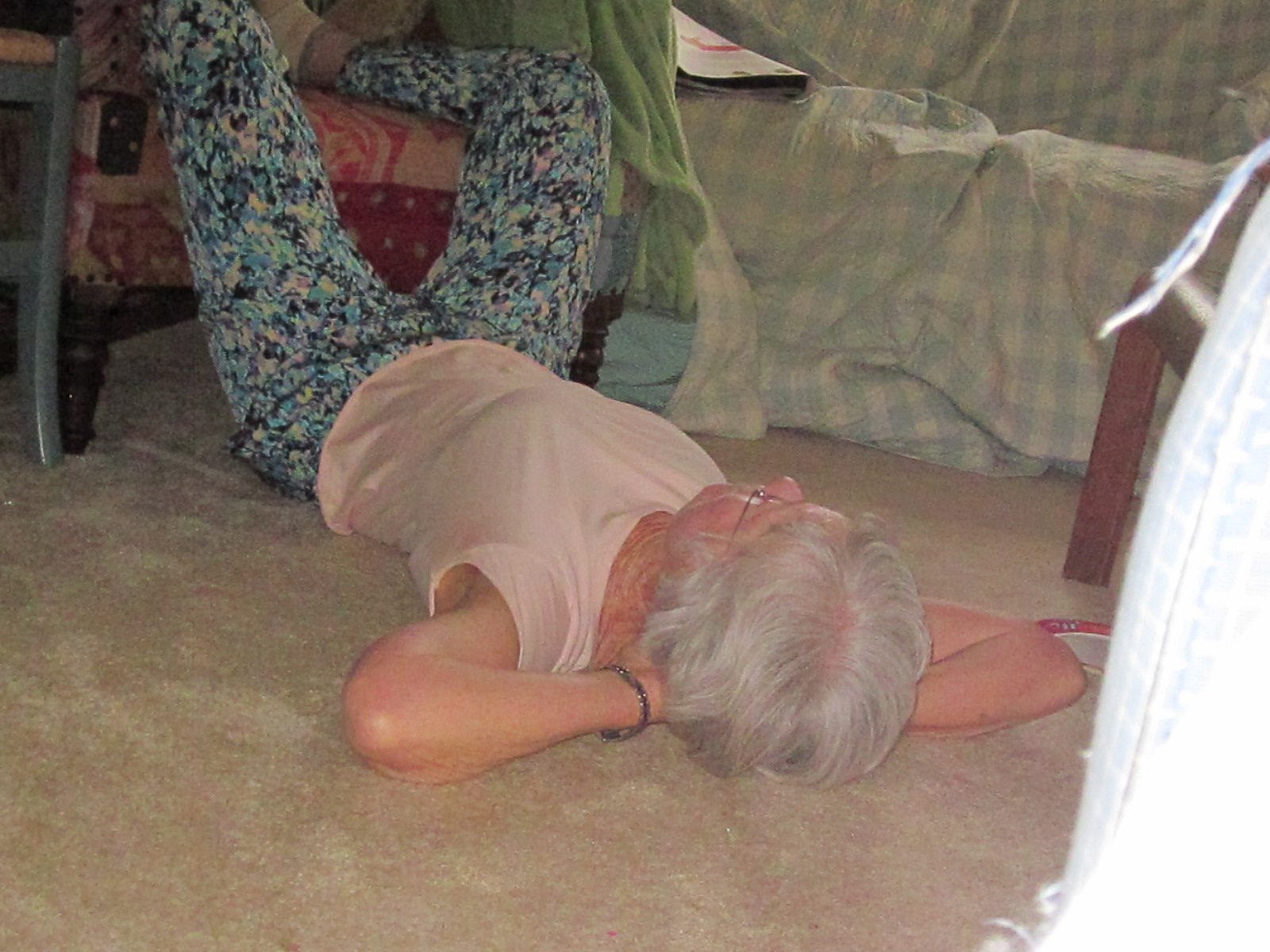
Lie on the floor with your butt up against the front legs of a chair and your bent knee legs on the chair

seat.  While in this restorative pose position, move in the very tiniest motions, a pelvic clock.  Ten up and down movement between 12 and 6, then 10 between 1 and 7, then 2 and 8, then 3 and 9 and so on around the clock face.  The pelvic tilt

is a miniscule movement using your abdominal muscles to produce a small swing from up to down.  You can look it up under Feldenkrais.  It works miraculously to unwind and restore balance to the lower back.

For a little eye candy, here is the sitka spruce forest we hiked in, a herd of elk crossing the dunes, the sunny beach and the wild flowers blooming their little spring hearts out.

2013-5-5sitka22013-5-5Opaint brush2013-5-5beach_01


Be well, Do well and Keep Moving.

Before you go, tell us what you have done to get the kinks out after a long drive or hours in a chair.  Leave a comment.

Fondly, Betsy

206 933 1889

www.DoWellWithBetsy dot com