
Arthritis, Health and Fitness, Keep Moving: Managing Arthritis

Be an Exercizer

Rise up because you remembered you love to exercise.

The equinox is here. Time to get back to exercise after the too-rainy, too-cold, too-snowy winter season. Couch potato syndrome set in after the holidays. If, like me, you have a 17-month-old in your life, you can observe a human in constant motion. Moving is what we were designed for. Many of us imagine that what is natural for a 2-year-old is unnatural for a seventy- or eighty-year-old. We’re naturally sedentary when we get older. In America, that’s how we behave. According to a recent issue of AARP magazine, 65.3 million US adults are considered physically inactive. That’s 23.3% of the adult population. Are you one of the 65.3 million and wish you weren’t?

What can help you find the motivation to be a person who moves? It turns out that not moving leads to less moving. Turning the switch from I’m a person who wants to move but can’t seem to do it, to a person who moves depends on whether the benefit of moving outweighs the cost. Our emotions can trip us up.

If I try pickleball, I probably won’t be any good and they’ll laugh at me.

If I sign up for that line-dancing class, people will find out I have two left feet. It won’t be fun.

If I join my friend hiking group, I’ll hold them back.

Why would we do something that made us feel incompetent, disrespected and exhausted. You might wonder how you got those negative expectations in the first place. Are those old experiences still applicable?

People I meet, my health providers, my hiking friends, folks on Facebook claim to see me as some sort of exercise bunny, a rare creature in my late 80’s. My happy place has always been outdoors, the more wilderness the better. I just naturally gravitate to walking or hiking outdoors and I found others who love it as much as I do. I’ve always thought of myself as a person who moves. I’m not exceptional. I know what makes me happy and I keep doing it. You can, too.

If you’re looking for a way to change from “I have to exercise to meet my fitness goals” to a person who “loves to exercise and how great that my fitness level is higher,” look back over your life and think about what movement you enjoyed when you were younger. Is there a place or group doing that in their older age? Senior Centers are often great places to find classes at your level and an eager group of folks to join, new friends bonded over being exercisers.
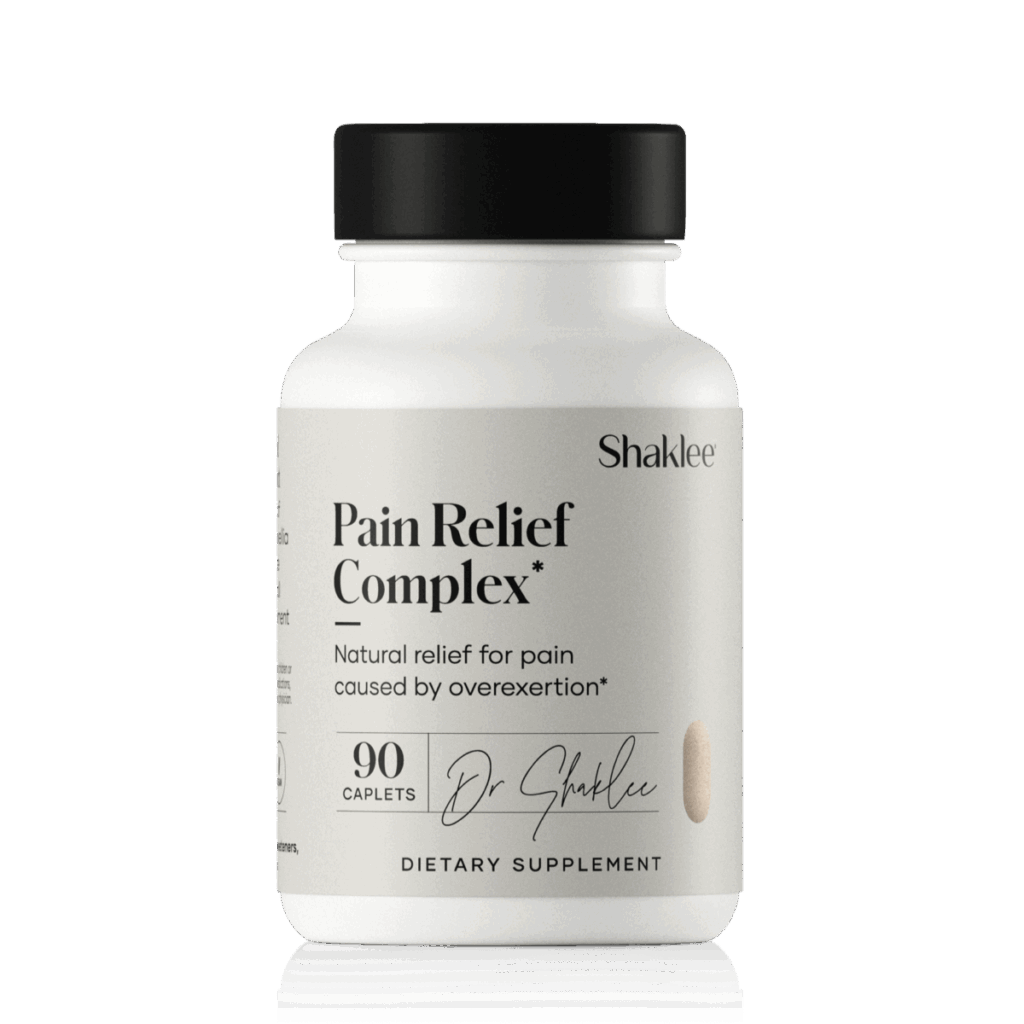
If pain is keeping you from moving, what have you tried to ease the discomfort? My knees are bone-on-bone with arthritis. I don’t like taking NSAIDs (Nonsteroidal anti-inflammatory drugs are medications that reduce pain, fever, and inflammation. Common examples include ibuprofen (Advil, Motrin), naproxen (Aleve), and aspirin, which are available over the counter. Prescription-strength NSAIDs include celecoxib (Celebrex), diclofenac, and indomethacin). They tend to damage the stomach and have other side effects. Shaklee makes a Pain Relief Complex that inhibits the pain path from knees to brain through herbs and without bad side effects. I’ve been taking two a day of years. Sometimes I need an extra one at lunch. This product and others for Joint Health can be found on my personal website, my Shaklee store. Take a look. You can also find many more articles about arthritis pain and joints at my www.GrandmaBetsyBell.com blog.

Let me know how you have gotten off the couch and back into your favorite exercise. Your solution and motivation might be just what another reader needs. Pass this post along if a friend could use the info.

Be well, Do well, and Keep Moving. Betsy

Never miss a health tip from GrandmaBetsyBell. Never miss a special offer or discount. You can unsubscribe any time.

Select a form to see a preview

Be Well health tips

brain exercises

Gentle Reader,

Brain exercises are instructive to any of us who experience lapses of memory or feel muddled in our thinking. May I share a recent posting by Dr. Jamie Mc Manus, Chair of Medical Affairs at Shaklee?  Her comments help with life in general but more specifically with understanding the role of exercise in brain health.


If you are looking to banish “brain fog,” forget your forgetfulness, and even support a better mood, then look no further than your running shoes. Exercise, it turns out, is an outstanding way for you to protect (or even enhance) your brain’s health.

Exercise is so powerful at helping the brain, scientists are suggesting that exercise can decrease cognitive decline, and it may even help you recover some function that you might feel you have lost. So, if you find yourself searching everywhere for your keys, struggling to remember names, or just feeling that you aren’t as sharp as you once were, then your first stop should be your local gym. 

 Personally, it would be outdoors that I would go searching for help, preferring a walk in the fresh air to the gym.  But a walk it is, no matter where, that will help unclog the brain.

When you are looking to keep your brain fit and functional, then make sure you include both physical and mental exercise.

 Physical exercise

For optimum brain health, you need both regular and moderately intense brain exercises.

Regular exercise means doing something aerobic (such as walking, jogging, swimming, or biking) at least 3-4 times a week (more is better) and moderate-intensity exercise is the type of exercise where you push yourself to new limits. For example, when walking, instead of a leisurely stroll, try to push yourself and pick up the pace. The key here is to breathe a little hard, but not hard enough that it is difficult for you to carry on a conversation.

 Regular exercise improves circulation throughout the body, including the brain. More blood means more nutrients and oxygen-rich blood going to your brain. Laboratory studies have demonstrated that exercise influences the synthesis and release of several neurotransmitters (such as norepinephrine, serotonin, GABA, and acetylcholine) and enhances the production of a growth factor called brain-derived neurotrophic factor (BDNF).[i]


 Exercise is good for the whole body and it helps to maintain healthy blood pressure, improves energy, helps lower stress and anxiety, improves mood, is good for heart health, and helps you maintain a healthy weight—all of which are beneficial for YOU and your brain.

 Mental exercise

Your mental capacity is no different from the rest of your body: you have to use it or lose it.

Part of creating your own brain fitness program is to stimulate your brain on a regular basis. When you do this, you increase and strengthen neural connections inside your brain, a process known as neuroplasticity.

 What can you do to stimulate your brain?

 Social engagement, crossword puzzles, completing challenging tasks, trying brain games or anything new, doing something differently, all stimulate your brain. You can even try brushing your teeth or eating with the opposite hand.

Just like the rest of your body, your brain needs your attention to keep it performing well throughout your whole life.

Shaklee’s new MindWorks comes with a free delivery of mind bending exercises from Cognifit.  If you really want to stretch your brain muscles, try it.  Or the popular Lumosity which I have been playing around with for a couple months.  I’ve been thinking about learning Swedish so I can read a book about the Swede Finns who came to this country around 1900, including my great grandfather, great uncles and my grandparents, all of whom are mentioned and pictured in this book.  It is frustrating to not be able to read Swedish.  Shall I try it and exercise my brain?

Use the comment section to tell me what your favorite brain exercises are.

Be well,

Dr. Jamie

Jamie McManus, M.D., FAAFP

Chair of Medical Affairs, Health Science, & Education

 Be well, Do well and Keep Moving,

Betsy

206 933 1889

www.HiHOHealth.com   for shopping