
Arthritis, Health and Fitness, Keep Moving: Managing Arthritis

Be an Exercizer

Rise up because you remembered you love to exercise.

The equinox is here. Time to get back to exercise after the too-rainy, too-cold, too-snowy winter season. Couch potato syndrome set in after the holidays. If, like me, you have a 17-month-old in your life, you can observe a human in constant motion. Moving is what we were designed for. Many of us imagine that what is natural for a 2-year-old is unnatural for a seventy- or eighty-year-old. We’re naturally sedentary when we get older. In America, that’s how we behave. According to a recent issue of AARP magazine, 65.3 million US adults are considered physically inactive. That’s 23.3% of the adult population. Are you one of the 65.3 million and wish you weren’t?

What can help you find the motivation to be a person who moves? It turns out that not moving leads to less moving. Turning the switch from I’m a person who wants to move but can’t seem to do it, to a person who moves depends on whether the benefit of moving outweighs the cost. Our emotions can trip us up.

If I try pickleball, I probably won’t be any good and they’ll laugh at me.

If I sign up for that line-dancing class, people will find out I have two left feet. It won’t be fun.

If I join my friend hiking group, I’ll hold them back.

Why would we do something that made us feel incompetent, disrespected and exhausted. You might wonder how you got those negative expectations in the first place. Are those old experiences still applicable?

People I meet, my health providers, my hiking friends, folks on Facebook claim to see me as some sort of exercise bunny, a rare creature in my late 80’s. My happy place has always been outdoors, the more wilderness the better. I just naturally gravitate to walking or hiking outdoors and I found others who love it as much as I do. I’ve always thought of myself as a person who moves. I’m not exceptional. I know what makes me happy and I keep doing it. You can, too.

If you’re looking for a way to change from “I have to exercise to meet my fitness goals” to a person who “loves to exercise and how great that my fitness level is higher,” look back over your life and think about what movement you enjoyed when you were younger. Is there a place or group doing that in their older age? Senior Centers are often great places to find classes at your level and an eager group of folks to join, new friends bonded over being exercisers.
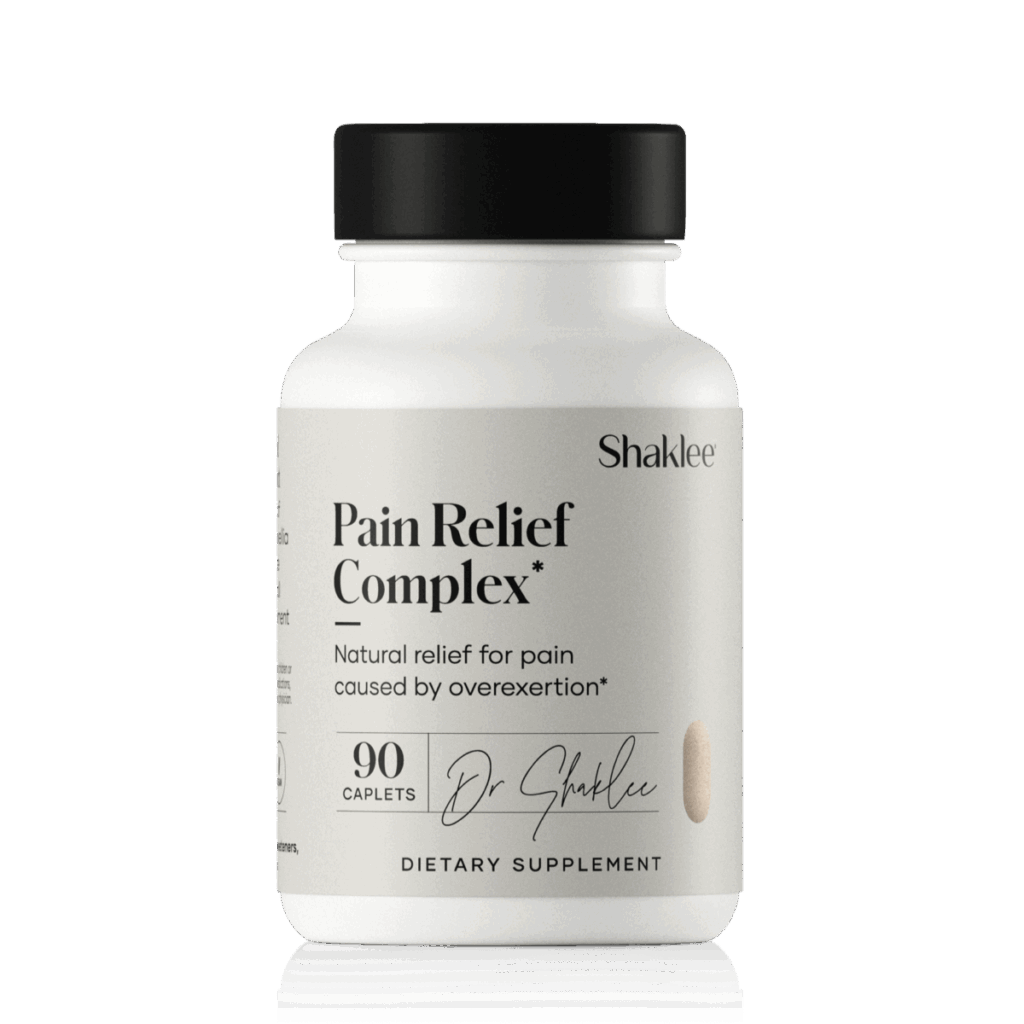
If pain is keeping you from moving, what have you tried to ease the discomfort? My knees are bone-on-bone with arthritis. I don’t like taking NSAIDs (Nonsteroidal anti-inflammatory drugs are medications that reduce pain, fever, and inflammation. Common examples include ibuprofen (Advil, Motrin), naproxen (Aleve), and aspirin, which are available over the counter. Prescription-strength NSAIDs include celecoxib (Celebrex), diclofenac, and indomethacin). They tend to damage the stomach and have other side effects. Shaklee makes a Pain Relief Complex that inhibits the pain path from knees to brain through herbs and without bad side effects. I’ve been taking two a day of years. Sometimes I need an extra one at lunch. This product and others for Joint Health can be found on my personal website, my Shaklee store. Take a look. You can also find many more articles about arthritis pain and joints at my www.GrandmaBetsyBell.com blog.

Let me know how you have gotten off the couch and back into your favorite exercise. Your solution and motivation might be just what another reader needs. Pass this post along if a friend could use the info.

Be well, Do well, and Keep Moving. Betsy

Never miss a health tip from GrandmaBetsyBell. Never miss a special offer or discount. You can unsubscribe any time.

Select a form to see a preview

Be Well health tips, Keep Moving: Managing Arthritis

Massive study uncovers how much exercise is needed to live longer

Reminder: Keep moving. Live longer

If you are not convinced yet that exercise helps lower the risk of mortality, read on. 

Consistent exercise is good for a person’s health and well-being—that much is well-known. But how many minutes of moderate or vigorous physical activity are needed to lower the risk of mortality? Astudy published in the journal Circulation shared findings on how much and what level of physical activity is needed to reduce mortality. 

While the 2018 physical activity guidelines recommend that adults engage in at least 150 to 300 minutes per week of moderate exercise, 75 to 150 minutes each week of vigorous movement or an equivalent combination of both intensities, it turns out that if adults do more than the recommended amount, it can lower their risk of death. Moderate physical activity is defined as walking, weightlifting and lower-intensity exercise. Meanwhile, vigorous exercise is categorized as running, bicycling and swimming. 

From two large prospective U.S. cohorts, 116,221 adults self-reported leisure-time physical activity—defined as exercise that is not done at work—through a validated questionnaire. The questionnaire was repeated up to 15 times over the course of 30 years.

The study found that working out two to four times beyond the minimum vigorous physical activity recommendations led to a lower risk of death from cardiovascular disease. Those who worked out two to four times above the moderate physical activity recommendations—about 300 to 599 minutes each week—saw the most benefit.

Participants who performed two to four times above the recommended amount of moderate physical activity had a 26% to 31% lower all-cause mortality and a 28% to 38% lower risk of cardiovascular disease mortality. On top of that, there was an observed 25% to 27% lower risk of non-cardiovascular disease mortality.

Additionally, adults who worked out two to four times more than the recommended amount of vigorous physical activity —about 150 to 299 minutes per week—were found to have 21% to 23% lower risk of all-cause mortality, according to the study. They were also reported to have 27% to 33% lower risk of cardiovascular disease mortality and 19% lower risk of non-cardiovascular disease mortality.

We are talking 5 hrs. a week of vigorous activity–getting your heart rate pumping, plus 10 hrs. a week of regular walking, swimming, or whatever your favorite activity is. The evidence is there. It is a choice we make every day.

But suppose it hurts when you walk. Suppose you have arthritis or an injury or you are recovering from knee or hip replacement surgery. Maybe you carry extra weight or have a pre-existing health condition. All is not lost. Begin and continue as best you can to build endurance. Ask your doctor what it is safe to do. And tell him or her that you will not be content with the average exercise level, but that you want a more robust old age. Tell your doctor about this study and you will surely get the support you want from him or her.

I have a lot of arthritis pain and my left knee is not working as well as it used to. Several Shaklee products help me manage the pain of arthritis: Pain Relief Complex, Recovery, Physique after workout drink, Alfalfa. I also practice Qi Gong joint lubrication exercises nearly every day. Stretching helps reduce pain and keeps the body flexible.

Make a plan to increase your level of exercise gradually until you reach the desired amount. Life is busy. Your health plan takes time. If you are serious about healthy longevity, put exercise first. Am I perfect with this? Not at all. Some mornings it is next to impossible to make myself take that walk.

Put an order in for Recovery and Physique and take off moving. Your brain and heart will love you for it and will serve you well.

Be well, Do well, and Keep Moving!  Betsy

http://