Resources, Scientific resources

Daedalus Project

You may be interested in the scientific study behind Performance, the hydrating drink that fueled the famous Daedalus Project, human powered flight.  The research document describing the problem and the solution and the results were first published in American Scientist, vol. 76, July-August 1988.  Worth reading to understand how unique Shaklee products are.  This same care is applied or has been applied to every product produced.   Nadel-1988.


Resources, Scientific resources

Landmark Study

Shaklee Health Sciences e-Bulletin April 2008

The Landmark Dietary Supplement Study

  1. The Shaklee Landmark Study

Here at Shaklee, we’ve been supporting healthy lifestyles including healthy food choices, smart supplementation, and regular exercise for over 50 years! And now we’re proud to have published the Shaklee 50th Anniversary Dietary Supplement Study, a landmark first-of-its-kind study that supports the potential benefits of long-term supplementation in a unique consumer population. The study, Usage patterns, health, and nutritional status of long-term multiple dietary supplement users: a cross-sectional study was published in Nutrition Journal, an online peer-reviewed scientific journal on October 24, 2007.

And the results are stunning! Long-term dietary supplement use was consistently associated with more favorable blood levels of important nutrients and key heart health biomarkers. More importantly, long-term users of multiple dietary supplements generally reported lower prevalence of disease in self reported health conditions including elevated blood pressure and diabetes, when compared to single multivitamin users and nonusers.


This first-of-its-kind study was conducted on a unique study population using new online data collection methods employed for the very first time in collaboration with renowned nutritional epidemiologist Dr. Gladys Block, from the University of California, Berkeley, School of Public Health.


Information regarding diet and supplement intakes, exercise, and health status was obtained from online questionnaires and on-site physical examinations from 278 long-term Shaklee multiple dietary supplement consumers. Data for 602 matched nonusers and 176 single multivitamin supplement users was obtained from the Nationwide Health and Nutrition Examination Survey (NHANES) the largest and longest running national health and nutrition survey, sponsored by the National Center for Health Statistics.

  1. Study Results


The long-term multiple supplement users included more females, were slightly older, better educated, had higher incomes, and lower body mass index (BMI) than the other groups. Dietary supplements consumed on a daily basis by more than 50% of the multiple supplement users included such products as a multivitamin/mineral, vitamin B-complex, vitamin C, carotenoids, calcium with vitamin D, omega-3 fatty acids, flavonoids, glucosamine, an herbal immune supplement, a probiotic supplement (women), and a soy protein supplement (men).


Blood Nutrient Levels generally increased with increasing dietary supplement use. Blood nutrient levels for folate, vitamin C, alpha and beta carotene, and vitamin E were consistently found at more optimal levels in the multiple supplement user population. To address the safety of long term use of a broad array of supplements, the investigators also found healthy and safe blood levels of vitamin D and iron, nutrients for which high intakes have been associated with possible adverse effects. Specifically, serum ferritin, a measure of iron storage, was highest, and more optimal, among women in the multiple supplement user group vs single multivitamin users and nonusers. Conversely, it was lowest, but still more optimal, in the male multiple supplement users compared to the two other groups.


Blood Biomarkers. Multiple supplement users had higher blood levels of HDL cholesterol and lower blood levels of triglycerides, both consistent with lower heart disease risk. Increased supplement use was also associated with more favorable concentrations of serum homocysteine and C-reactive protein, a marker of low grade inflammation. Of note is the fact that none of the 278 multiple supplement study participants had an elevated CRP level (>3.0 mg/L) identified as high risk by the American Heart Association.


Disease Prevalence. In general, disease prevalence was lower in the multiple supplement user group compared to the multivitamin only user and nonuser groups. In addition, when researchers controlled for differences between groups in variables such as age, sex, education, income, and body mass index, they found the risk of elevated blood pressure was 39% lower in multiple supplement users than in nonusers and the risk of diabetes was 72% lower in multiple supplement users compared to nonusers. Finally, long-term multiple supplement users were four times more likely to describe their health as “very good or excellent” compared to nonusers.

  1. Study Conclusions


This landmark study provides compelling support for the health benefits seen in long-term users of a broad array of dietary supplements as compared to single multivitamin and non-supplement users. Long-term multiple dietary supplement users consumed a broad array of vitamin/mineral, botanical, and condition-specific dietary supplements on a daily basis. They were more likely to have optimal concentrations of chronic disease-related biomarkers including serum homocysteine, C-reactive protein, high-density lipoprotein cholesterol, and triglycerides and less likely to have suboptimal blood nutrient concentrations including folate, vitamin C, alpha- and beta-carotene, and vitamin E. Long-term supplement users also had a lower risk of prevalent elevated blood pressure and diabetes compared to nonusers.


A limitation of the study is the fact that the data are cross-sectional, and therefore the reported associations cannot presume causality. And although quite compelling in their support for the health benefits of supplementation, the study findings need to be confirmed by further research into the usage patterns, health, and nutritional status of other groups of long-term users of dietary supplements.

  1. What This Means for You

The Landmark Study findings help to validate what we in Shaklee Science and Technology have promoted all along. Long-term healthy Shaklee lifestyle approaches including smart dietary choices from foods and supplements, and regular exercise to achieve and maintain a healthy weight are indeed strong supporters of optimal health and vitality. And we want you to be sure that your healthy lifestyle includes these smart diet, supplementation, and exercise strategies as you strive to achieve optimal health:

Eat Healthy. Your healthy eating plan includes smart choices from every food group and emphasizes fruits, vegetables, whole grains, and fat-free or low-fat milk products. It also includes lean meats, poultry, fish, beans, eggs, and nuts and is low in saturated fats, trans fats, cholesterol, salt, and added sugars.  

Supplement Wisely. Make wise supplement choices a part of your daily routine. A comprehensive and balanced multivitamin/mineral supplement with at least 500 mg calcium and vitamin D just makes good sense. Antioxidant nutrients help protect cells against aging so be sure you’re considering the antioxidant vitamins C and E, and beta carotene. Ensure your intake of critical B vitamins including folic acid, vitamins B6 and B12, to help protect DNA and support healthy aging. Try to increase your intake of the omega three fatty acids, EPA and DHA, which have been associated with reduced risk of coronary heart disease as well as improvements in inflammatory and metabolic balance. Finally, look to probiotic nutrition to support healthy digestion and immune function.

Exercise and Achieve a Healthy Weight. For the two out of every three Americans who are overweight or obese, losing weight is the first priority for improving health. Make regular physical activity a key component of your overall health management program to balance your caloric intake from food with the calories you expend each day. Try to be physically active for at least 30-60 minutes most days of the week and increase exercise duration or intensity for even greater health benefits or to help manage body weight.

Be well. Dr. Jamie McManus MD, FAAFP Chairman, Medical Affairs, Health Sciences and Education

For information about the supplements mentioned in the article, go to my personal Shaklee website, type in any of the items mentioned–calcium, vitamin D, soy protein–and you will find the products thousands of Shaklee users have been taking.  Consistent use of these products over time may give you similar results.  They have helped me remain vigorous into my late 70s.  As a man I met at the gas station this week said when I told him I had recently been to my 55th college reunion, “You holding up well!”

Be well, Do well and Keep Moving, Betsy


Be Well health tips, Health and Fitness

No cure for aging

Gentle Reader,

In my Facebook inbox this morning came, “There’s no cure for aging, so embrace it.”  I thought this is a post just for me.  It sings my tune. Plays my tambourine.  One of the comments let a little air out of the balloon by speaking truth to all of us songbirds of perpetual spring.


Tommie Montgomery Leydsman

There are many aspects to aging that are, quite frankly, NOT what you are dying to experience! Knees that dare you to move in the morning, BEFORE you have taken one of countless relievers of pain. Haphazard sleeping patterns, I mean who doesn’t love to wake up feeling refreshed at 3 A.M. , but dead asleep again at 4 A.M., only to wake up AGAIN at 5 A.M., pushing away at an annoying object on your chin. That object, of course, being the book you began reading at 3 A.M. !!!


The countless solicitations in the mail letting you know that the countdown clock has slipped into fast forward. You receive reminders like refrigerator magnets for funeral homes. I have always wanted to know whom I should contact after my demise. Not to mention the number of aging services that send you click style ballpoint pens, because our little fingers find it too hard to take the cap off a Bic.


However, there are upsides. I could fill my social calendar with invitations to hear people “advise” me on the best way to invest my entitlements, a.k.a., Social Security! Are they kidding? No, but they do provide “refreshments.” What I want to know is how every hearing aid company got my address? This group is especially devious. They send out envelopes, the size and quality of an upscale wedding invitation, with your name handwritten on the envelope. They invite you, in EXTREMELY LARGE PRINT (because your eyes are also going) to come in and try on some all but invisible hearing aids. I’m wondering if they are the same kind that the Secret Service uses, you know, the ones that they couldn’t hear out of when the White House perimeter was breeched?! *snarky laugh here*


I also love my copies of the AARP and Costco magazines, with aging celebrities on the cover, who don’t EVEN look like they are aging. When you read the articles, these people are going on Safari’s, taking hot air balloon rides over the Serengeti, car racing, starting new businesses (probably using their windfall SS checks as startup money.) You’ve got to watch these “entitlement generation oldies.” They’re a slippery lot!!!!

BUT…………….. All in all, I am embracing the process. Very happy to be aging, happily!
ENJOY THE VIDEO!!!
>


What’s better than the truth?  The simple add-on:  Very happy to be aging.


I natter on in these pages about strategies to slow the process down, to mask the symptoms or attempt to correct the problems with exercise, therapies and supplements.  It seems to be a more positive approach; a going with the flow while using every available oar to navigate the rapids.  Why not?  I’m not in favor of the alternatives: sitting down, going deaf, searching for bigger and bigger print (I’m typing at 140% as it is.  That way I don’t have to lean over to see the screen and can maintain an upright back posture. Hehehe)


Most of you, my faithful readers, are in the game to go out dancing, so let’s keep sharing our ideas for how to do that with aplomb.


Love you all,


Be well, Do well and Keep moving,

Betsy


206 933 1889

www.grandmabetsybell.com/be-well/  thoughts on how to stay healthy

www.HiHoHealth.com  shopping for Shaklee products

Vivix the anti aging tonic.  I love my swig every morning.

Arthritis, Be Well health tips, Health and Fitness, Keep Moving: Managing Arthritis

personal training results

Gentle Reader,
I was wondering if I could walk to the car on my rubbery legs from the lunges with a weight vest on when  PJ Glassey captured me on video.  I had just finished my 21 minute workout with Dan this morning at the Xgym on Alki in Seattle.  My goal in going to the Xgym 2 x a week for personal training is to increase bone density.  At my next annual physical in Sept 2015, I’ll get that tested and report on the success.  What has surprised me is the functional improvement in my daily life tasks.

Betsy X Gym Testimonial

Here’s one of the exercises, bench row with barbells.

I am in the middle of what they call splits: controlled small movements monitored for form, lasting until the muscles in use fatigue completely, about 4 1/2 minutes.  Efficient and not damaging to joints.  Can you see that it’s 25 lbs in each hand?
Two things:  I have hiking friends who give me a run for my money without this kind of training.  Some people are lucky with their genes and don’t have as much to overcome as I do.  Secondly, I am convinced diet and supplements make a big difference in my recovery and improvement.  I always take an after workout recovery drink Physique or the 180 smoothie Shaklee makes, to repair the muscle break down.  The protein powder has leucine in it that heals muscle.  I get enough protein every day from both plant and meat and fish sources, at least 100 grms.  And I eat many servings of vegetables, beets, carrots, celery, kale, other greens, onions, tomatoes plus apples, raspberries and blueberries.  No grains, or very little.  It seems to be working to keep this arthritis-ridden body going.  Hiking, anyone?
Be well, Do well and Keep Moving,
Betsy
www.GrandmaBetsyBell.com/be-well/  for more health stories and tips
www.HiHoHealth.com to shop for Shaklee products on my personal web site
206 933 1889  I still love to talk to people, answer questions, hear your stories.

Sign up today for my monthly Health4U newsletter for the latest Shaklee product information and special offers. Click here to sign up.

Be Well health tips, Health and Fitness

Dirty dozen non-organic foods

Gentle Reader,

The following information will help you make healthier choices when grocery shopping. Organic food is worth money. Take care of yourself and your family. These are the dirty dozen non-organic foods to avoid.
Dirty Dozen Infographic


I am grateful to my customer, Lanni, for sharing this web site with me.  You can follow Garrick Dee, something of a guru for juicing, at http://www.juicingwithg.com/category/blog/.  I hope this helps you at the check out counter justifying the expense of organic.  It does make a difference.

Be well, Do well and Keep moving,

Betsy

Be Well health tips

Change Habits

Gentle Reader,

Would you like to change habits?  Is there something you have a core desire for but don’t seem to be arriving at it?  May I share an insight I have had about my two core desires that have resisted the changes required to realize them?

I put on 20 lbs. my junior year in high school.  I got too sick to swim competitively and finished the season eating the way I always ate when in training, but doing no exercise to burn off those calories.  Boom!  Twenty pounds; stretch marks; shock. The whole family got involved in Betsy’s weight problem, monitoring my caloric intake and my weight every single day at breakfast.

No will power! No will power! No will power! My brothers and father taunted.

The Yo-Yo dieting program began.  I lost and gained those same 20 pounds (and 5 more) for the next twenty-five years.  I owned three sets of clothes.

In 1985, I met Jayme Curley who encouraged me to address a number of “little” health issues by starting a wellness program of soy protein shakes and a group of vitamins every day.  The protein shake became my breakfast, alone or as the liquid I poured over a small bowl of cereal. I started to lose weight.  The Shaklee Company, whose products I was taking, brought out a Slim-up-and-Live program.  With it came an audio tape by the same name. I listened to it faithfully each morning and evening before getting out of bed and before turning off the light.  A soothing voice spoke.

Picture yourself at your ideal weight.  Picture what you can do, running on the beach, playing ball with your kids, dancing for hours with airy steps, stamina and pleasure.

Picture yourself in a skinny pair of jeans, stepping in your car, driving to a friend’s, joining in the conversation with comfort, pride and confidence.

Without knowing the science behind it, I had changed my eating habits and I had created a new image of myself.  The cue (boredom with the tasks of wife and mother) for eating a dozen cookies on my way home from grocery shopping, faded.  New cues (excitement about the new pants I fit into) dominated, and I no longer reached for the packaged Lorna Doones.  To eat cookies all the way home flew in the face of my image of myself in that bathing suit.

Charles Duhigg analyzes The Power of Habit, Why we do what we do in life and business, and presents his scientific findings about the formation of habits.  Listen to this description of the five key points in his book by Thomas Frank, the college info geek.

The loop for cue > activity > reward is an unconscious habit and requires some work to figure out what the reward is you are craving when you do the activity.  One of my core desires is to write a book.  I go to my desk, turn on the computer, and instead of going to my project, I check email.  After an hour or so, I struggle to redirect myself to the writing project to get the reward I want, a satisfying writing experience.


My cue was turning on the computer first thing in the morning.  Examining the loop, I realized that the cue lead me to the wrong activity.  Turning on the computer brings up gmail, often moving on to Face Book.  I started to resent my core desire—writing the book.  I was stuck and unclear about my next step.  Gmail and face book provided a diversion from the discomfort my project caused.


First, I decided, as Duhigg suggests, to examine what was behind the gmail distraction.  Wanting to connect with people. My house is quiet.  I live and work alone.  I feel disconnected from friends and family. Gmail fills this void.  Or so it seemed. Unconsciously I turned to email and face book for that “Good morning, Betsy” contact.


What I realized was that it did not satisfy that longing for connection to read and respond to email.  I needed to develop other ways and other times to get people in my life.  Recognizing the poor reward this email activity provided my desire for human connection, I plan to call, email and arrange connections in the evenings and on weekends.  I can make a change.  I can enjoy the thrill of three fresh morning hours several days a week with nothing to do but write.  My people reward will come later.  My creative activity reward is immediate.  I believe people will be there for me.  All I have to do is organize it.


I am five days into this.  Turns out, I didn’t believe I could change.  Belief is a major ingredient in changing habits. Sunday night I had one bad dream after another.  Every story line I began in my dream was co-opted by the computer which forced a story arc having nothing to do with my plot.  It was as though the computer became Hal in the Space Odessey, taking over my mind.  I woke up laughing at the power of the subconscious to twist a mind into knots.


On Monday, I managed to complete my morning stretches, meditation and short walk, return to the office and open my project WITHOUT looking at email.  I knew there were several Shaklee business items that needed attention. I knew I had ample time after lunch to address them.


Monday was creatively productive beyond hope.

Tuesday was the same.

I completed all my business and household work.

Email took a fraction of the time.  I made dinner arrangements with a grandson and snow shoeing plans with my girl friends.


Yesterday, I wrote in the Uptown Espresso and did not read email even though a little ping told me someone called.


Rewards?  I wrote the next chapter.  The one to follow is waiting for me to put pen to paper.  I broke through the wall.


How can this discussion of habit help you?  You might pick up Duhigg’s book.  If you want to lose weight or stay faithful to an exercise program, eliminate seductive food from your food intake, figure out the cue that leads to the activity, and discover what the reward is.


My daughter who told me about this book realized she was anticipating a glass of wine the minute she stepped into the light rail car on her way home from work.  She wasn’t happy with that habit. She decided to develop a new activity to get the reward.  The reward was a signal to her system that her workday was finished.  A short run would bring the same reward.  Stepping into the neighborhood for a breath of fresh air and exercise said “release from work” with every step.  To help with the anticipation, she took her running clothes to work and changed into them before her commute.  Cue in place, activity (run), reward (ah, the workday is over).


For some of us, change comes more easily with a buddy.  That’s why the 180 Turnaround Weight Management program provides so much support. In Dr. Jaime’s most recent talk, she describes the four tools to use to stay motivated.

  • Your scale,
  • your tape measure,
  • your body fat index and
  • your hand held food tracker.

Behavior Tracking Tools that shape a new habit

The four trackers are the tools that help form the habits you need to override the habits that got you over-weight in the first place.  People weigh too often. People skip the tape measure part.  They fail to make a chart where they can write down the change.  Pants size can do this job especially if you have a skinny jeans waiting for your new body to show up. I was out with a friend the other night who proudly showed me her outfit and said she hadn’t been able to get into it for a long time, but now she could.  What a motivator to keep going that little success is!


People weary of keeping track of their food intact. That’s why the hand held app can ease the pain and actually increase your conscious eating all day long.  Shaklee’s 180 app is easy to use. Your phone is always with you.  Just the act of pulling it out and recording your next bite will change your behavior.  It becomes a habit.  When you hit your goal weight, you will mentally be calculating the little indulgences if you have faithfully used that tool for the whole duration.


Calculating your body fat is simple if you have a new fangled scale that does that for you.  At my Xgym, they run my stats every 6 – 8 weeks. I have consistently lowered my body fat even though I haven’t lost weight.  Lean muscle is building every week.  I haven’t been trying to lose weight.  I have been trying to gain muscle so my bone density will increase.


Here she is, explaining the program.

Here is the best description of the 180 Weight Management Program available.

Be well, Do well and keep moving.  If you would like a supportive guide in any habit change you want, I am here for you. If you have a habit changing method that works for you, please share with all of us.  Betsy

GrandmaBetsyBell guides you to your ideal weight and helps you keep it off.


Arthritis, Be Well health tips, Keep Moving: Managing Arthritis

Pain Management

Last week I questioned the wisdom of masking pain, asking if I might be missing a diagnosis by taking my Pain Relief Complex. Following up with you after 72 hours of no herbal pain tablets, I can tell you that taking them alleviated discomfort. Not taking them left me with the discomfort of aching hip joints, sore knee and ankle.  The numbness in my right leg came and went, mostly went.   I experienced a tough workout at the hands of JR at the Xgym, walked four miles up and down the hills of West Seattle, sat at the computer, drove the car, and attended meetings all without debilitating pain.  I was happy at the end of the experiment to take a Pain Relief Complex before going to bed to insure a pain-free sleep.

I visited my chiropractor, David Kirdahy, during this hiatus.  He found the usual pelvis miss-alignment, clicking and prodding everything back in place.  He wondered if I might have a neuropathy in the right leg and foot.  I was not able to give him specific cues as to the center of the numbness. It is hard to help with pain management when I can’t identify exactly where the pain is.


In answer to the questions, is there anything you can’t do because of numbness or pain? I had to answer, no.


I am left with the annoying unanswered question, in spite of advice from a neurologist and a nurse who read my blog post, if my activities are not impaired, why seek further diagnosis?  I did that already in May of last year and have the report from the sports medicine doctor at the Polyclinic.  Clearly, taking Pain Relief Complex is not covering up a condition that may need attention.  I seem to be able to handle my pain management with all the measures I already use.

I wanted to show you a schematic of the COX 1 and COX2 pathways, but the pictures and science is too complicated for me to introduce here.  I don’t understand it well enough to comment scientifically.  I do remember the schematic the Shaklee scientist used to describe how Pain Relief Complex works. You can explore this for yourself if you are interested.

My intention here is to look at the more typical medications prescribed and over the counter that people use for pain management.  The wisdom in the alternative world is that pain medication masks conditions and that pain is an indicator of something that needs medical attention.  I agree with that, hence my experiment. What I have been taking for pain did alleviate discomfort.  Stopping it did not reveal a condition that seems to require immediate attention.


Type of pain

Every one experiences pain differently.  Some of us push through.  Others of us want to eliminate the slightest hint of discomfort.  Pain is a communicator from the body to us, telling us something is amiss.  Pain management is different for each of us.  If it weren’t for pain, we wouldn’t know to take our finger off the hot stove, or to rest with our foot elevated after spraining an ankle.


Pain can be categorized.  Acute pain typically comes on suddenly and has a limited duration. It’s frequently caused by damage to tissue such as bone, muscle, or organs, and the onset is often accompanied by anxiety or emotional distress.

Chronic pain lasts longer than acute pain and is generally somewhat resistant to medical treatment. It’s usually associated with a long-term illness, such as osteoarthritis. In some cases, such as with fibromyalgia, it’s one of the defining characteristic of the disease. Chronic pain can be the result of damaged tissue, but very often is attributable to nerve damage. See WebMD. A third type of pain is psychogenic, the emotional side of physical pain.


The WebMD article classifies pain in a couple other ways: tissue damage or nerve damage; type of tissue or part of the body affected such as back pain or chest pain, muscle or joint pain.

Drug Therapy most often prescribed for acute or chronic pain

Milder forms of pain may be relieved by over-the-counter medications such as Tylenol (acetaminophen) or nonsteroidal anti-inflammatory drugs (NSAIDs) such as aspirin, ibuprofen, and naproxen. Both acetaminophen and NSAIDs relieve pain caused by muscle aches and stiffness, and reduce inflammation (swelling and irritation). Topical pain relievers are also available, such as creams, lotions, or sprays that are applied to the skin in order to relieve pain and inflammation from sore muscles and arthritis.

If over-the-counter drugs do not provide relief, your doctor may prescribe stronger medications, such as muscle relaxants, anti-anxiety drugs (such as diazepam), antidepressants (like Cymbalta for musculoskeletal pain), prescription NSAIDs such as Celebrex, or a short course of stronger painkillers (such as codeine, Fentanyl, Percocet, or Vicodin). A limited number of steroid injections at the site of a joint problem can reduce swelling and inflammation.

In April 2005, the FDA asked that Celebrex, an anti-inflammatory drug, carry new warnings about the potential risk of heart attacks and strokes, as well as potential stomach ulcer bleeding risks.  At the same time, the FDA asked that over-the-counter anti-inflammatory drugs — except for aspirin – revise their labels to include information about potential stomach ulcer bleeding risks. [WebMD article on pain management]

A couple hundred milligrams of aspirin, or other NSAIDS, Tylenol or other acetaminophens for a short period of time, say 48 hours, is fairly safe.  However, one of the most well known risks of painkillers is liver damage from acetaminophen. “Although [acetaminophen] has been used for years and overall is extremely safe, liver toxicity can occur with use of more than 4,000 milligrams in a day,” says Dr. Glaser. “This would be eight 500-milligram pills, which is the dosage of extra-strength Tylenol. Liver damage or failure may also occur at lower doses in those who drink alcohol regularly or who have pre-existing liver disease, such as hepatitis C.”

Because acetaminophen is often incorporated into other drugs, you may not be aware of exactly how much you’re taking, which further compounds your risk. “It’s also included in multiple other remedies for colds or sinus symptoms and is commonly paired with other stronger painkillers in medications such as Vicodin and Percocet,” says Glaser. “If an individual is not aware of this fact, he may unintentionally expose himself to amounts of acetaminophen in the danger zone.”

NSAIDs and Ulcers

Taking ibuprofen and naproxen doesn’t pose as great a risk to liver function as acetaminophen. However, some damage to the stomach lining is a possibility, which can lead to blood loss from the irritated area, stomach pains (gastritis), and even ulcers. This is also true of aspirin, which is related to NSAIDs and has many of the same properties. And if you use aspirin along with ibuprofen or naproxen, the risk to your stomach is even greater.

“Any of these pain drugs alone can cause ulcers, and using them together only increases the risk,” says Glaser. “All three of these medications reduce pain through their effects on the prostaglandin pathways.” Unfortunately, those same effects are what lead to an increased risk of gastritis and ulcer formation.

The prostaglandin pathways carry the pain signal to the brain.  What these drugs are doing is interrupting the COX 2 pain pathway.  Unfortunately these drugs also affected the COX 1 pathway, which resulted in stomach bleeding.  Celebrex was the miracle when it came out because it did not cause damage to the stomach.  Unfortunately for patients and for the drug company, Celebrex was implicated in heart attacks. [for further understanding of COX 1 and COX 2, go here.]

NSAIDs and Kidney Function

Though it’s rare, some people could risk kidney problems from using ibuprofen or naproxen. “A less common but severe complication related to these medications is kidney failure, which occurs more commonly in patients who have co-existing risk factors, such as diabetes or high blood pressure,” Glaser says.

Addiction

Some painkillers prescribed by doctors can become addicting, in particular Vicodin and Percocet which contain opiates.  You can explore the internet to discover how high the abuse of these drugs has become, especially among high school students seeking to numb psychological suffering.  If you have unused painkillers in your medicine chest, left over after surgery, get rid of them, especially if there are teenagers in your world.

But I digress, showing my bias against the use of medications. My original blog post tells my anti-drug bias.

There are many other options.  My blog posts are full of them.  I am particularly unwilling to take NSAIDS given the fact that I had Hepatitis C as a young adult, communicated by a dirty needle in the hospital when I was having a D&C after a miscarriage.  In and of themselves, these drugs can be helpful. It is when they are used frequently and without regard for other conditions, such as high blood pressure, stomach issues, high consumption of alcohol.  It can become a stew of interacting foreign substances.

Personally, I have found that the herbal Pain Relieve Complex does a pretty good job of keeping me pain free, along with chiropractic, Feldenkrais, frequent long walks, yoga, massage, Pilates moves and strength building training sessions at the Xgym. My trainers constantly check for good posture and make sure I avoid putting stress on joints that are compromised by osteoarthritis.  Pain Relieve Complex is a COX 2 inhibitor.  The Shaklee scientists found plant compounds that interrupt the pain path without any damage to the stomach or heart.  I plan to keep doing what I am doing until break-through pain or severe numbness stop me in my tracks.  Then I will check in with the sports doc for a new MRI.  I am convinced I am not increasing my risk by waiting.

To understand how Pain Relief Complex works, click here.  To order some from my personal Shaklee web site, click here.

I welcome your comments.  It takes a village.

Be well, Do well and Keep moving,

Betsy


Arthritis, Be Well health tips, Keep Moving: Managing Arthritis

Do I need a pain diagnosis?

Do I need a pain diagnosis?

I was standing in front of the piano along with my fellow choir members.  Heading back to my seat, I realized my right leg was dangling from my hip. No feeling. Just a dead weight.  While standing for rehearsal something, probably in my back, pinched off a nerve to the entire leg.  Numb.  If I took a step, would I crash to the ground?


This has happened before.  I was alarmed by the numbness in late May of 2013. I was leaving in a few days for a writers’ retreat in southern France.  While I have experience the numbness off and on during the past two and a half years, when it came on right before leaving for a 100-mile hike in England in May of 2014, I was worried.  I remembered walking from Montmartre to the Shakespeare and Company bookstore on the left bank, talking to my right leg the whole way, “Lift, swing, step, lift, swing, step.”


The incident last week was much worse.


Dr. Kirdahy, the chiropractor who has been keeping me out of the operating room for years, was puzzled when I went to see him.  “You have no pain?”  “No” I reassured him.  “I have no pain.”  “How can that be?”


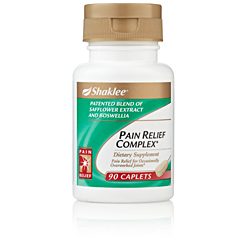
Maybe because I take Shaklee’s Pain Relief Complex first thing in the morning and as often as required to keep pain at bay all day long.


“What’s in this Pain Relief?”

Pain Relief contains two herbs:  Boswellia and Safflower


Boswellia extract

  • A controlled clinical trial found that a daily dosage of 1,000 mg of Boswellia

Extract taken in divided doses significantly improved joint discomfort,

Knee flexion, and walking distance.1

  • In a clinical study, an extract containing boswellic acids was shown to promote

comfortable joint movement.2

Safflower extract

  • The benefits of the safflower are newly discovered in the West, but have a long

tradition of use in Asia.3


  1. Kimmatkar et al. Efficacy and tolerability of Boswellia serrata extract in treatment of osteoarthritis of knee: a

randomized double blind placebo controlled trial. Phytomedicine. 2003;10:3–7.

  1. Etzel R. Special extract of Boswellia serrata (H15) in the treatment of rheumatoid arthritis. Phytomedicine.

1996;3:91–94.

  1. Hsu HY. Oriental Materia Medica. A Concise Guide. 1986. New Canaan, CT, Keats Publishing Inc. and

Oriental Healing Arts Institute, Long Beach, CA.

[From the Shaklee Product Guide, a fact sheet]


I told Dr. Kirdahy I would come back next week after 36 hours without any Pain Relief Complex.

This chiropractic visit induced a search of the literature for the answer to my question: does pain help diagnosis?

According to Spine Health, because the causes of back pain can be very complex, it is often more difficult to get an accurate diagnosis for back pain than for other medical conditions. While some spinal diagnoses are relatively straightforward (such as tumors, infections, or fractures), for many conditions there is little agreement among spine specialists about a diagnosis.

However, getting an accurate diagnosis of the cause of back pain is critical, because different diagnoses will require very different treatment approaches. And the sooner an accurate diagnosis is made, the sooner the patient can find an appropriate treatment for pain relief and to improve his or her ability to enjoy everyday activities.

Pain is our friendliest enemy — it keeps us out of trouble even though it often seems to actually be the problem.

The body ‘locates’ pain near the surface quite well but has trouble indicating the source when the pain is deep. Pain from deep injuries, diseases or infections of organs, such as the heart, stomach, lungs and back may seem to come from somewhere else nearby or may radiate into multiple places. Intense pain may be more localizing but not always.

Therefore, when back pain is accompanied with other changes, fever, swelling, redness, heat, neurological problems or changes in body functions, the diagnosis may be sharper — and the back pain diagnosis may be more serious.

 The milder backaches that one feels over one’s lifetime can generally be successfully managed by simple back pain treatments — rest, medication, massage, the application of salves, exercise, weight loss and learning to put up with it.

So, if the severity of back pain does not serve as a guide for when to see a physician, the question is how does one know? While there are exceptions, there are several generally accepted guidelines of when to see a doctor for back pain:

If the back pain has any of the following characteristics, it is a good idea to see a physician for an evaluation:

  • Back pain that follows a trauma, such as a car accident or fall off a ladder
  • The pain is constant and getting worse
  • Back pain that continues for more than four to six weeks
  • The pain is severe and does not improve after a day or two of typical remedies, such as rest, ice and common pain relievers (such as ibuprofen or Tylenol)
  • The pain is worse at night (most common forms of back pain are alleviated by rest)
  • Severe pain at night (e.g. pain that wakes one up from deep sleep)
  • Abdominal pain that accompanies the back pain
  • Numbness or altered sensation in the saddle area (upper inner thighs, groin area, buttock or genital area)
  • Neurological problems, such as weakness, numbness or tingling in the leg(s) or arm(s).

I have seen orthopedists, neurologists and sports medicine doctors for my chronic pain.  Currently, I handle the pain pain relief20667with Pain Relief Complex, exercise, Back2Life machine every morning, and moving as much as possible during the day (sometimes a challenge as I am a writer!)  So I would say I live my life pain free.

The above article persuades me that it is time to cut out the Pain Relief for a day or two to see just how bad this pain is.  Before leaving for England last May, I had an MRI and a consultation with the Sports medicine doctor at my clinic. She told me I have several bulging discs, a normal condition in people my age, but that I was not at risk for hospitalization or major trauma on my hike.  In fact, she assured me, the 100 miles hike would be good for me.

And it was.

The degree of increase in the numbness worries me.  Doing without Pain Relief even for 48 hours worries me, too.

I’ll keep you posted.  Next week, I will discuss the most common medications used to handle osteoarthritis pain, and why you might want to think twice about using them habitually.  Stay tuned.

Be well, Do well and Keep moving,

Betsy

206 933 1889

betsy@hihohealth.com


Leave your comments.  They help other readers and me, too.


Be Well health tips, Weight Loss

Think Thin

Gentle Reader,

I hear “I’ve got to lose those extra pounds I gained over the holidays.”  This cry goes up every year in January.  The newsstands and grocery checkout lanes are full of magazines with the latest and greatest way to lose weight.  Did you ever wonder why it is so hard to get to your goal weight and stay there?

Could it be a question of BELIEF?  Perhaps you do not believe you can maintain your goal weight for the rest of your life.  Perhaps you, like me, have gained and lost countless pounds never believing you would/could arrive at and remain at your goal weight from now on—even when the holidays came and you indulged a little more than normal.

This was my personal view for many years. Those extra 25 pounds just hung around, got lost and found themselves again.  After the holidays, I would have to make a great big effort, increase the exercise program, go back to my fat clothes for a while and suffer.  Not anymore.

What changed for me can change for you, too.  I developed an enduring belief in myself at 140 instead of 160.

A little book called Mach II: With Your Hair on Fire, by Richard Bliss Brooke came across my desk recently.  In chapter 7, he describes how we change our beliefs and how the new belief will create new results.  He opens this chapter with this quote from the Bhagavad-Gita “Man is made by his belief. As he believes, so he is.”  I will add Dr. Shaklee’s famous saying, “What you think, you look. What you think, you do. What you think, you are!”

In my case, I suddenly gained 25 pounds when I got so sick in high school that I couldn’t swim.  I swam competitively and ate all I wanted without ever going over 137lbs:  milk shakes after school, candy bars, fried chicken and mashed potatoes and gravy, biscuits with butter and honey, all that great Southern cooking available to me every day.  My mother was so shocked at my sudden weight gain—along with the stretch marks on my thighs and breast—that an all out war on food ensued.  My father and younger brothers got involved in weighing in Betsy every morning and counting her calories every night.  Mother and I ate competitively, going for a 25 lb weight loss in a few months.  We ate those appetite-suppressant chocolates called Aydes, grapefruits and nothing else for lunch. I can’t remember what other stringent means we concocted.  You have probably done similar things to lose the weight you fight.

“We made up all the beliefs we have about ourselves.  We made something up based on what happened, or what we thought happened, or what someone told us happened.  And then, we went about learning to believe in those stories by listening to them over and over again” in our thoughts.  I decided, based on my father and brothers’ words, that I had no will power and that I would never lose those extra 20-25 pounds.

“Human beings are not born believing anything.  All we are at birth a clean slate for limitless possibilities.”

Brooke says the first step is “We give up our right to be right about us.”

Think about that statement.  We give our right to be right about ourselves.

He goes on to explain “Most of us hold on to what we believe to be true—about life and most everything else—as if there were no possibilities for any other truth.  Breaking through your barriers to success requires that you make up a new set of ideas of what’s possible, so that your possibilities support and empower your desires.  It comes down to a new screenplay.

Sometime in the 80s, I started drinking Shaklee’s Energizing Soy Protein shakes and leading weight loss classes called Slim-up and Live.  I listened to a 20 min. audio cassette in which questions or images were suggested.  I listened every day, often more than once.   At some point, I was a person who weighed 140lb.—not 160lb.—and my eating and exercise supported that vision, that belief.  I gradually started to think thin.

Brooke uses an interesting analogy taken from the practice of dyeing cloth used by Native Americans.  “Creating a new belief is like dyeing cloth in the old traditional way.  Native Americans would take a piece of natural fabric and change it into a different color by soaking the cloth in a dye, squeezing it out, hanging it up to dry and set, and continuing the process over and over again until the cloth ended up the color they wanted—the color they thought was possible to achieve.

“At first there was little, if any, change in the color of the fabric.  It took many soakings, rinsings and settings, and the change of color was gradual. Although at times the change was hardly noticeable, the new color deepened each time.  After a while, this change accelerated, becoming richer faster, until soon there was no hint of the original color.  The old color was gone and in its place was the new color.

“Our beliefs are created the same way.  This ‘dyeing’ process with our beliefs occurs in the mind and is called imprinting.  We have the extraordinary ability to create thoughts at will, and we can imprint those thoughts on and into our minds at will, as often as we choose—literally hundreds of times each day

“Like the depth of the color of a piece of dyed cloth, we can also control the quality and intensity (i.e., power) of the imprint we create. To the degree that our picture has clarity and detail, and can be expressed and experienced by our senses and emotions, our mind will respond to it as if it is a real experience.  The richer and more complete the image, the greater its impact in and on your mind.”  And on your behavior.

I have lost that cassette tape years ago, but found in Richard Brooke’s book, a series of questions very similar to those I used to change my belief so I would think thin.  Ask yourself these questions and answer them with as much detail and specificity as you can to form a new belief in yourself.

  • What exactly is an excellent weight for you?
  • What exactly do you look like at that weight?
  • What is the shape of your body at that weight?
  • Describe the new lines, curves, contours and the definition of muscles you see now.
  • What do you think about when you see yourself in the mirror?
  • What does the scale indicate when you step on it?
  • How do your clothes fit?
  • What do your new clothes look like? How do you look wearing them?
  • How do you feel at this new weight?
  • Are you doing any new activities now? What do you like best about them?
  • What are people saying to you about the new you?
  • What are people saying about how good you look?
  • How do you feel about that?
  • Do you have any new attitudes?
  • Are you more confident…? more attractive…? more secure..?happier?

“You may think that your answers to these questions sound silly, contrived.  That’s fine.  Realize that your answers are providing a powerful clarity—your answers are filling your mind with a richness that’s the equivalent of having a real life experience.”

If you want to further the power and effectiveness of creating real-time present pictures of the answers to each of the above questions, write them out and then speak them into your computer’s recording device and make your own MP3.  Play it to yourself as you exercise, ride the bus, do the dishes.  You will create a new belief about yourself at your ideal weight.  You will think thin. If writing out the details is too much for you, speaking these questions into a recording device and then pausing after each question, can be just as effective.  Listening to the question with enough time after it to visualize yourself in this new ways is a powerful tool to changing your belief.

180 Turnaround Program

While you are programming your mind for success, it is helpful to have a weight management eating and exercise program to follow.  I strongly recommend the Shaklee 180 Turnaround program for healthy weight loss. Right now is an advantageous time to participate as Shaklee has announced a major push to help people lose a total of 40,000 lbs.  WOW!  Big goal.  Check it out here.

The 180 Turnaround Program not only feeds your body the calories, protein, fat and fiber it needs with two replacement meals a day, but also helps your body keep its lean muscle mass.  Only the fat goes.  This means your metabolism stays high and you continue to have good energy all day.  Here is my youtube channel with success stories.

Think thin by changing your belief about your ability to succeed.  Once you are at your ideal weight, continue to think thin and support your resolve by using the Lean and Healthy program.  That’s what I have been doing for years.  Those extra couple pounds from the holidays are gone already thanks to the Lean and Healthy program.

I’d be happy to help you get on a weight management path with all the support your want from me.

Be well, Do well and Keep moving, Betsy

206 933 1889

You may want find peace around your struggle with weight by working with Grace Bell,  Eating Peace . In telecourses she asks, Making peace with food, not war, is so difficult for many. Where does it go wrong? What’s really going on? How can I become free again with food, and innocent as a child?


Be Well health tips, Health and Fitness

Hearing loss and dementia

Gentle Reader,

I can’t hear you!  Will you please speak up?

I can't hear you!
I can’t hear you!

I noticed I was the only one asking for increased volume.

I arrived early for yoga so I could put my mat right in front of the instructor.  Otherwise, I missed her instructions.  The meditation went right by me.

I cupped a hand behind first one ear and then the other to hear the reader in our foursome at Louisa’s where several groups of four were taking turns reading aloud what we had written in the previous forty-five minutes.

One particular daughter speaks so softly that I missed half of what she said.  Since she has the belief that I have not listened to her much of her life, this is particularly serious.  I can’t be asking her “What did you say?” over and over. She might believe that I don’t hear her because I don’t listen.

At my annual physical this past October, I asked my doctor about this matter of missing things and straining to hear in certain settings.  He referred me to the Polyclinic’s audiologist. Sure enough, I tested below 20—the line of perfect hearing—in both ears, the left one more severe than the right.  A follow up visit with the ear/nose/throat specialist determined that the hard-of-hearing diagnosis is age related and not caused by anything that could be fixed with an operation. Surgery?  Yikes.  That had never crossed my mind.  I had the closing conference with the audiologist.  “Here is what we have to offer you for the best and most nuanced hearing enhancement.” Price tag, $6000.

I nearly fell out of my chair and watched my fall trip to Europe disappear into the realm of Never-Never.  I became an observer of ears and noticed a lot of people have spent $6000 to hear better.  Or have they?  I talked to many and discovered there is an alternative. Costco. Suspicious of a quality discrepancy between private and warehouse medicine, I made an appointment to check it out.  This required joining Costco.  I am not a Costco shopper.

Luckily, for me, my audiology person at Costco had worked in the private sector before moving to Costco.  She explained the difference—and it was not about quality.  Sale of hearing aids is lucrative in private practice.  The mark-up is unregulated.  Medicare and Medicaid pay nothing for hearing aids. (I wonder if that will change when the results of several studies catch the public eye.  More about that in a minute.) Doctors and clinics in the private sector of medicine are happy to have big-ticket items to sell and hearing aids are among them.

Costco on the other hand is all about volume and a low margin of profit, 5% in the case of hearing aids according to my specialist.  They just cut a deal with the top of the line, Phonak, which angers the private practice audiologists.  The batteries sell for $.23.  And when you join, the Costco/Amex card charges the minimum monthly payment and no APR for 6 months, giving one a chance to space out the cost with no interest.  To read an interesting discussion of Costco’s decision to sell Phonak and the industries reaction, click here. The ones I chose are the most nuanced as far as being able to move the volume up and down without taking the hearing aids out of your ears.  The price?  $3000, half the price for a better product.

I walked out of Costco on Christmas Eve with hearing aids and greeted 20 people for a stand up oyster stew and cocktails party a few hours later.  I found it easy to turn the volume up and down as needed just by pushing a tiny button on the right (increase) and on the left (decrease).  The apparatus is the size of a kidney bean and rests behind the ear attaching by a thin transparent wire to a tiny nub that fits snugly into the ear.  I got the feel for inserting the nub with minimal practice. Later on Christmas Eve, the tympani, trumpets and organ needed quieting down.  When my stepdaughter leaned in to whisper something during the service, I turned it up, adjusting quickly to meet the situation.  In the past, I would not have heard her.  Period.  Now I could.  On Christmas Day, twenty family members and friends sat around a massive table and I could hear every word, even the words not directed at me.

Since my hearing loss is not severe, why bother?  Why not wait until it gets much worse? The audiologist told me that there is evidence that untreated hearing loss and dementia may be connected.  The problem of a dramatic increase in the prevalence of dementia—doubling every 20 years—and the fact that preventing or delaying dementia is easier than reversing it, gave rise to a study of 635 people from the Baltimore Longitudinal Study of Aging.

The conclusion drawn from this careful study (2011) is that “Hearing loss is independently associated with incident all-cause dementia. Whether hearing loss is a marker for early-stage dementia or is actually a modifiable risk factor for dementia deserves further study.”  If you are interested, I recommend you read the abstract which can be found here.  They don’t know cause and effect, but the coincidence is there.

An earlier review (2003) of unattended hearing loss and quality of life studies came to this conclusion:

Uncorrected hearing loss gives rise to a poorer quality of life, related to isolation, reduced social activity, a feeling of being excluded, and increased symptoms of depression. There is a significant correlation between uncorrected hearing loss and reduced cognitive functions. There is no clear proof that hearing loss is the cause of the reduced cognitive function, but indirect evidence from some studies supports this hypothesis. If the hearing loss is indeed a cause of cognitive decline, this is a very strong argument for early detection of hearing loss and fitting of hearing aids. However, hearing loss and cognitive decline having a common cause is also a good reason for early detection and fitting of hearing aids: The cognitive decline will exacerbate the consequences of missed information due to the hearing loss. The more auditory information that is available, the easier it will be for the impaired cognitive system to process it successfully. Stig Arlinger, Department of Audiology, University Hospital,

Linköping, Sweden Negative consequences of uncorrected hearing loss––a review


No one is coming right out and saying, “Get hearing aids and avoid dementia.”  Here, however, is an argument no one will disagree with, as remembered by my friend who wears hearing aids.  It is posted on her audiologist’s wall.


The background is faint picture of a grandpa walking with his young grandson. The content goes something like this:
How much did my hearing aids cost? Let’s see–at least three good friendships, a lot of aggravation with my loving spouse, a regular bridge game, my grand children thinking I didn’t care about them, and many other activities that I used to hold dear like group gatherings, singing and going to the movies. The actual aids were really inexpensive! 


If you have a little—or a lot—of trouble hearing, and haven’t taken any action to address this problem, why wait any longer?  Whether you want to avoid dementia or increase your capacity to connect with people you care about, either reason is a valid push toward making that appointment.  I am so glad I did.


Be well, Do well and Keep moving.  Betsy